
How to fly with a toddler comfortably usually comes down to two things, managing transitions and staying ahead of basic needs before they turn into a meltdown.
If you have ever watched a happy toddler flip moods right when boarding starts, you already know why this topic matters, planes compress time and space, and small problems get loud fast. The good news, you do not need a “perfect” child or a suitcase full of gadgets, you need a plan that matches toddler behavior.
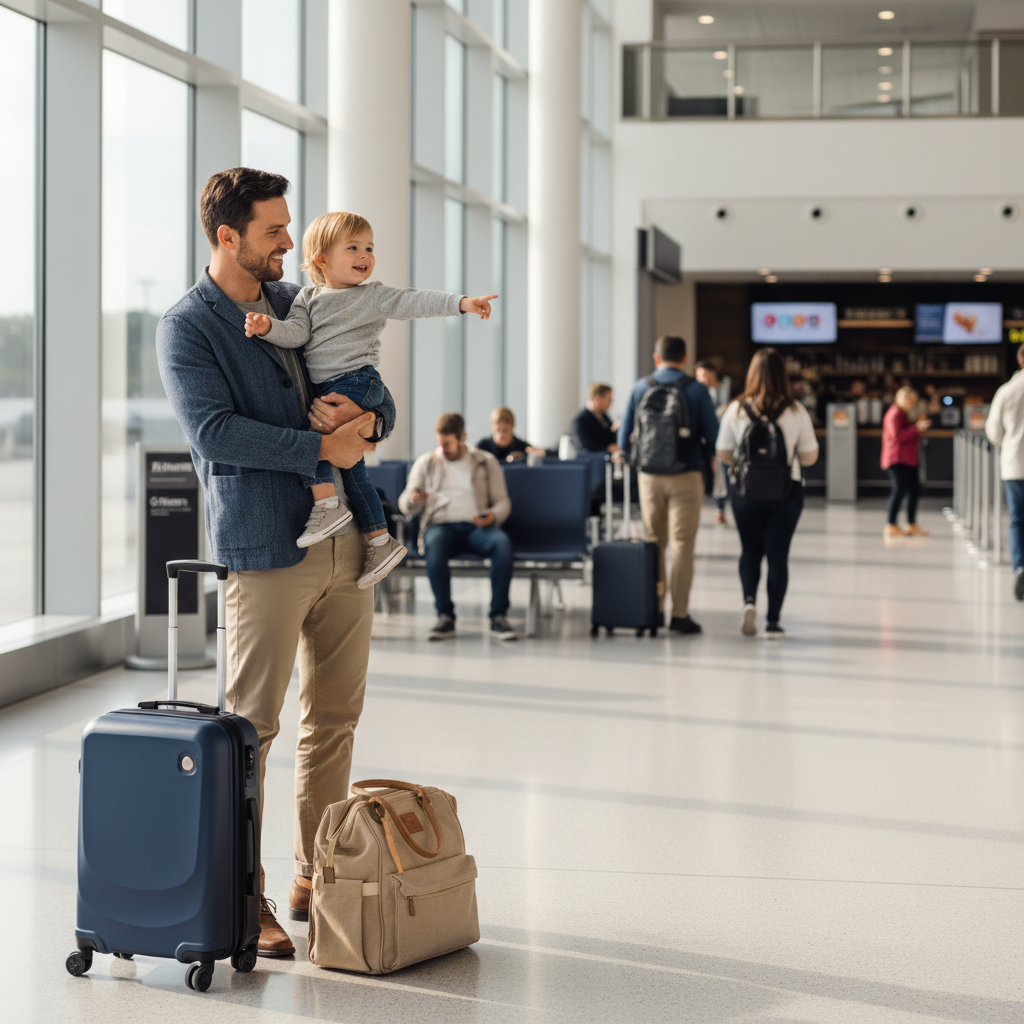
This guide focuses on what tends to work in real airports and real cabins, what to pack, how to time food and naps, and when to stop forcing it and pivot. You will also get a quick checklist, a table for seat and gear choices, and a few “if this happens, do that” scripts.
What makes toddler flying hard (and how to plan around it)
Toddlers rarely struggle because they “hate flying.” They struggle because flying stacks several hard moments back to back, lines, bright lights, strangers, loud announcements, and a long stretch of being told to sit still.
- Transitions: parking to shuttle, shuttle to terminal, terminal to gate, gate to plane, plane to seat, seat to stillness.
- Loss of control: toddlers often push back when every adult says “not now.”
- Body stuff: hunger, thirst, constipation, ear pressure, and fatigue show up as behavior.
- Overstimulation: screens help, but too much novelty can also spike energy, then crash.
When you plan, think in segments, what keeps your child regulated for the next 30 to 60 minutes, not the next five hours.
Before you book: flight timing, seats, and what to pay for
A lot of “how to fly with a toddler comfortably” decisions get easier before checkout, because timing and seating do more heavy lifting than any toy.
Choose timing with your toddler, not with your calendar
- Nap flyers: many kids do best when wheels-up happens near nap time, with enough buffer to avoid a rushed airport sprint.
- Morning kids: earlier flights often mean fewer delays and a fresher toddler, but only if wake-up time stays realistic.
- Avoid tight connections: if you must connect, more layover time usually beats less, toddler pace is toddler pace.
Seat selection: what actually matters
If your budget allows, buying your toddler a seat tends to reduce stress, because you gain a predictable “home base.” It also lets you use an FAA-approved car seat, which many families find stabilizing.
According to the Federal Aviation Administration (FAA), using an approved child restraint system is recommended for children who fit within the device limits, because it provides protection during turbulence.
| Option | Pros | Tradeoffs |
|---|---|---|
| Lap child | Lower cost, easier to soothe up close | Harder on your body, less personal space, tougher during turbulence |
| Purchased seat + car seat | Familiar routine, containment, hands-free moments | More gear, carrying the seat through airport |
| Window seat for toddler | Fewer aisle bumps, visual distraction | Bathroom exits take more coordination |
| Aisle seat for adult | Easy bathroom runs, quick standing breaks | More contact with carts and passersby |
If you are debating aisle vs window, a common compromise is toddler by the window, adult on the aisle, and if you have three seats, keep the middle as the flexible zone.
What to pack in your carry-on (a realistic list, not a fantasy list)
Pack for the flight you have, delays, missed naps, and one surprise mess. The goal is fewer “we are stuck” moments.
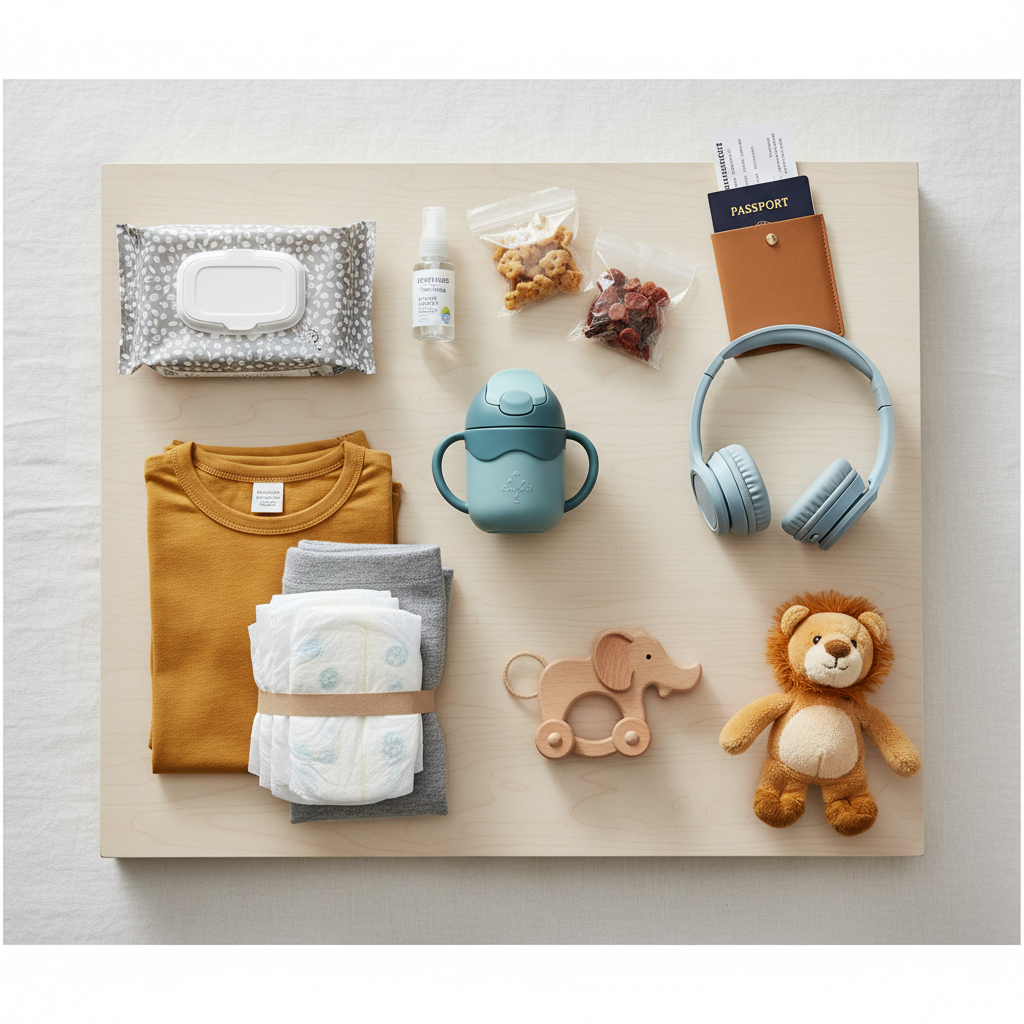
The “must-haves” that usually earn their space
- Snacks in layers: a mix of fast comfort snacks and slower “project snacks” like raisins, cereal, or crackers in small containers.
- Spill plan: wipes, a few paper towels, and one extra shirt for you, not just the toddler.
- Change kit: diapers or pull-ups, rash cream if used, and a full outfit plus socks.
- Comfort anchor: one lovey, small blanket, or familiar sleep cue, not five new toys.
- Simple entertainment: sticker book, reusable water-wow style pads, mini cars, chunky crayons, or a small notebook.
- Headphones: kid-sized, volume-limited if possible, plus a backup plan if they refuse them.
Nice-to-haves that help in specific scenarios
- Gate-check stroller: helpful in big airports, but some toddlers do better walking and “helping.”
- Travel potty seat or foldable liner: helpful during potty training, but only if your child already tolerates it.
- Med basics: any needed prescriptions, fever reducer if your pediatrician recommends, and a thermometer if you worry during trips.
For health questions, especially around medication, it is safer to check with your pediatrician, because age, weight, and medical history change the answer.
Airport game plan: keep the energy usable, not explosive
Most families lose comfort points before boarding even starts. You can get them back with a few deliberate moves.
A simple rhythm that works in many airports
- Arrive with margin: not to wander, to avoid rushing your toddler into a stress spiral.
- Move first, sit later: find a safe walking loop near the gate, burn energy before you ask for stillness.
- Food and water before boarding: you want your toddler calm as the line forms, not suddenly starving.
- Bathroom attempt: even if they say no, a low-pressure try reduces surprises 20 minutes after takeoff.
Security and TSA, what helps
According to the Transportation Security Administration (TSA), families can bring formula, breast milk, toddler drinks, and baby food in quantities greater than 3.4 oz, but these items may require additional screening.
Practically, keep liquids and toddler food in an easy-to-reach pouch, so you are not unpacking your whole bag while also holding a wiggly child.
Boarding and takeoff: tiny choices that prevent big tears
Boarding is loud, slow, and crowded, which is basically toddler kryptonite. If you want to fly with a toddler comfortably, treat boarding like its own phase with its own plan.
Early boarding vs last-minute boarding
- Early boarding works if you need time to install a car seat, organize bags, or your toddler gets anxious standing in the jet bridge line.
- Later boarding works if your toddler cannot tolerate sitting still, you trade setup time for fewer minutes “trapped.”
If you can split duties with another adult, one boards with gear, the other walks the toddler until the line shrinks.
Ear pressure without drama
Swallowing often helps with pressure changes, so offer water, milk, or a snack during ascent and descent. Some toddlers refuse in the moment, so keep options visible and easy. If your child has ear pain, congestion, or a recent ear infection, it may be worth checking with a pediatric professional before flying.
In-flight routine: a calm loop you can repeat
The cabin reward is predictability, if you build it. Think in cycles of 15 to 30 minutes, and rotate activities before boredom turns into seat-kicking.
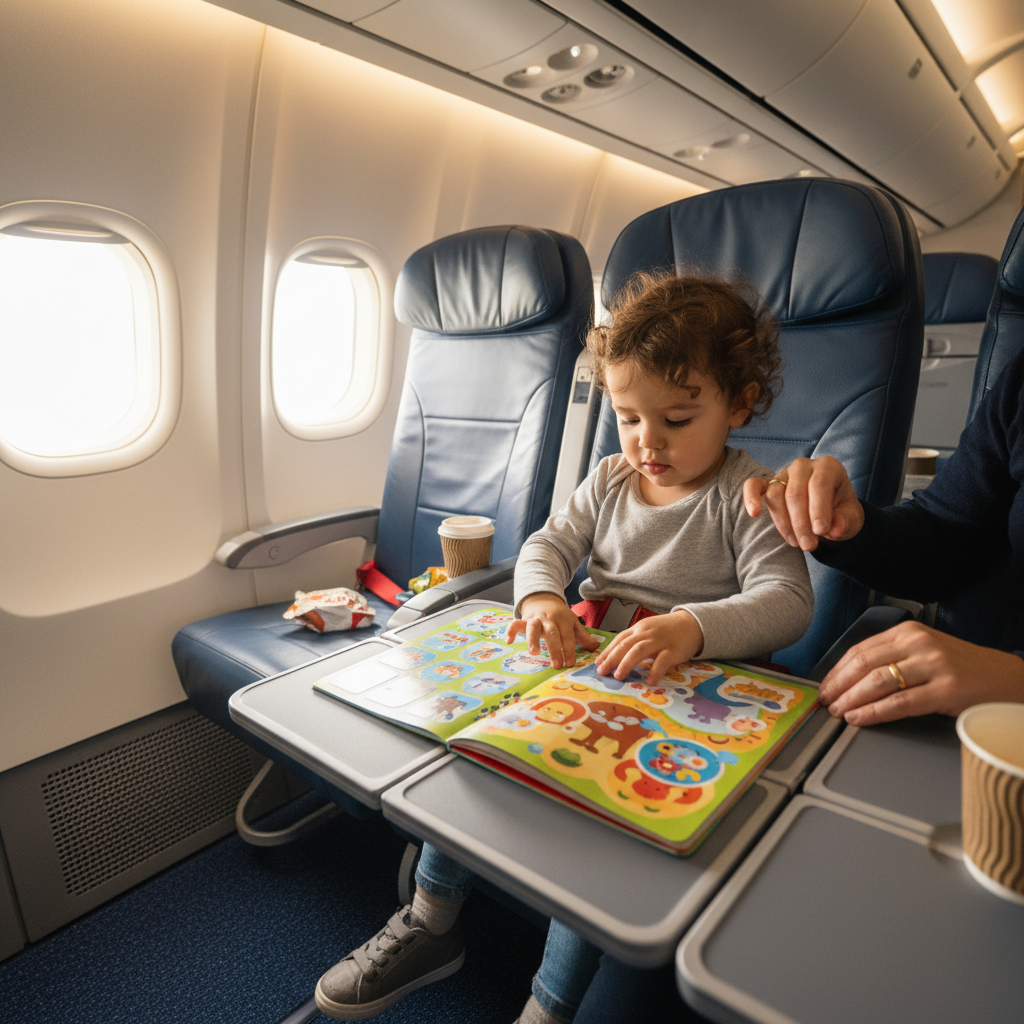
A sample “repeatable loop”
- Settle: seat belt, look out window, quick snack.
- Hands activity: stickers, crayons, small toy.
- Movement break: stand in your row, stretch, quick aisle walk when safe and allowed.
- Screen time: one episode or a short game, then transition off with a snack or story.
- Rest cue: lovey, blanket, dim screen, quiet voice.
Key points that reduce power struggles
- Offer two choices: “crayons or stickers,” not “what do you want.”
- Normalize feelings: “It is hard to wait,” often works better than “be good.”
- Save surprises: hold one new item for the roughest stretch, often descent or the last hour.
If your toddler melts down anyway, aim for regulation over discipline. A quieter corner of your row, a firm cuddle, and less talking often de-escalate faster than negotiating.
Quick self-check: are you set up for comfort or for chaos?
Use this as a fast pre-flight scan. If you answer “no” to several, fix the easiest ones first, snacks and timing beat fancy gear.
- Do you have 2x the snacks you think you need, with at least one high-value favorite?
- Is one bag pocket reserved for wipes and a change of clothes?
- Do you have a plan for boarding timing that fits your toddler’s temperament?
- Can your toddler sleep cue happen without a perfect environment?
- Do you have one “break glass” option, a show, a lollipop, a brand-new sticker book?
Common mistakes that make flying harder than it needs to be
- Overpacking entertainment: too many choices creates decision fatigue, for you and your child.
- Saving all snacks “for later”: later sometimes never comes, feed early to prevent the spiral.
- Chasing a strict schedule: travel days bend routines, focus on cues and comfort, then reset after arrival.
- Skipping your own basics: dehydration and low blood sugar make you less patient, bring your own water plan too.
When to get extra help (and what “help” can look like)
If your toddler has frequent ear infections, respiratory issues, or a medical condition that could be affected by pressure or long travel days, it is wise to ask a pediatric professional before you fly. The same applies if you are considering any sleep aids or medications.
On the logistics side, airlines can sometimes support family seating requests, special assistance for tight connections, or guidance on traveling with a car seat. If you feel overwhelmed, calling ahead often beats trying to solve it at the gate.
Wrap-up: a simple comfort plan you can actually follow
How to fly with a toddler comfortably is not a secret hack, it is a series of small, early decisions that keep your child fed, rested, and feeling some control. Pick the right timing when you can, pack for mess and delays, and run a repeatable in-flight loop instead of improvising every minute.
If you take only two actions, double your snacks and decide your boarding strategy before you reach the gate, those two alone prevent a surprising number of bad moments.