
travel crossbody bag small is the sweet spot when you want hands-free convenience without carrying a bulky purse, but it can feel tricky to find one that holds the essentials, stays comfortable, and still looks good.
If you’ve ever ended up with a bag that fits your phone but not your passport, or one that digs into your shoulder after an hour, you already know why “small” isn’t just about measurements, it’s about design choices that matter on real trips.
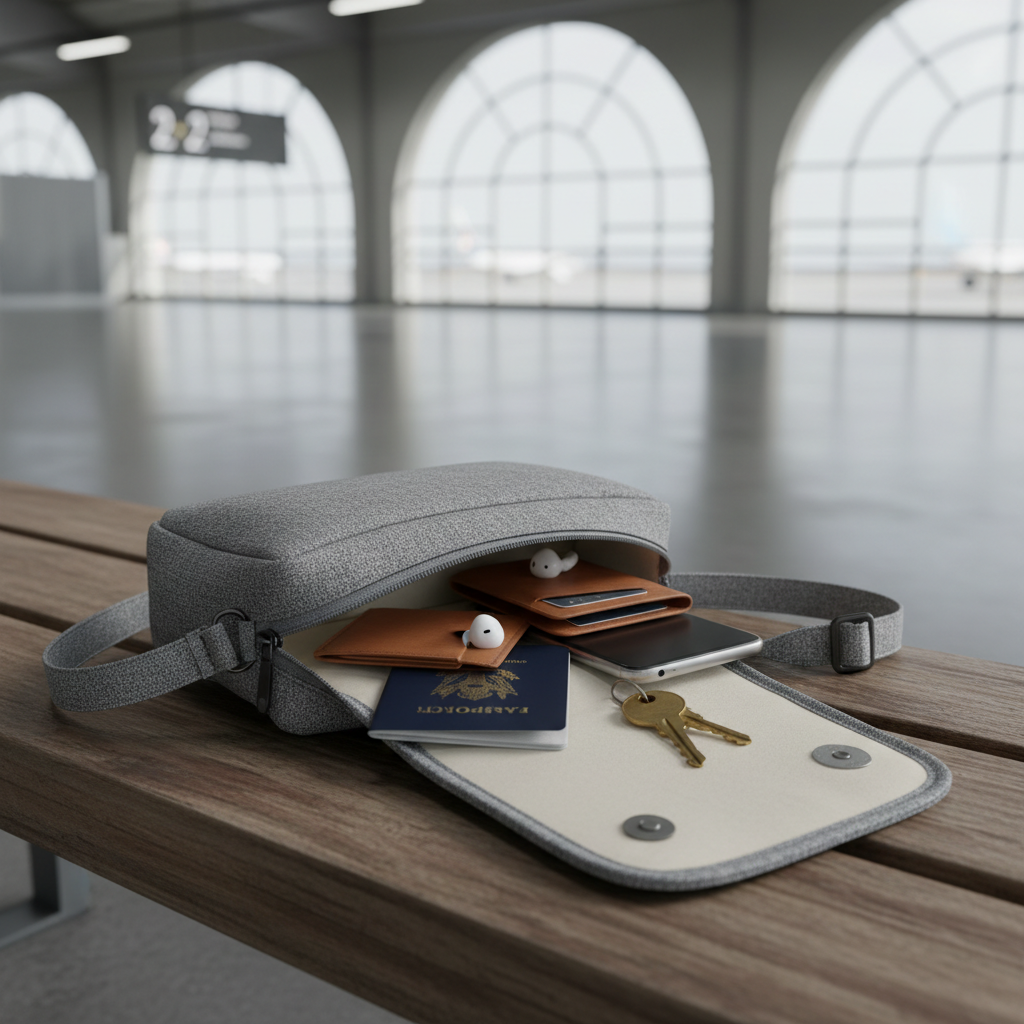
This guide focuses on practical selection: what “small” should still fit, what features actually reduce hassle, and how to match the bag to your travel style, from city walking days to airports and concerts.
What “small” should still carry on a travel day
A small crossbody works when it’s sized around what you truly reach for repeatedly, not what you might need “just in case.” For most travelers, that core kit is pretty consistent.
- Phone (plus room for a case)
- Wallet or card holder (some prefer an RFID sleeve)
- Passport/ID and boarding pass
- Keys
- Sanitizer, lip balm, tissues
- Small power bank or charging cable (optional but common)
If the bag can’t fit those items without forcing the zipper, it will feel smaller than it looks online, and it tends to wear out faster at stress points.
Why some small crossbody bags fail in real travel (and what to watch)
Many “cute” small bags are made for errands, not for airports, transit, and long walking days. The usual failure points are predictable.
- Poor strap geometry: thin straps twist, slide, and create pressure spots.
- Fussy access: a bag can be secure and still let you grab a transit card quickly, but some designs make you fight every zipper.
- Bad interior layout: one big open cavity sounds flexible, yet it turns into a phone-and-keys scratching party.
- Weak hardware: swivel clips and buckles matter more than most people think, because they take constant load.
- “Small” that’s too shallow: it fits a passport only if you bend it, which gets old fast.
According to TSA, keeping items organized and accessible helps move smoothly through screening, especially when you’re juggling ID and electronics. A well-laid-out bag supports that reality better than a fashion-first mini.
Quick self-check: is a small crossbody right for your trip?
This is the fast way to decide whether you’ll love a compact setup or feel cramped.
- You mainly carry essentials and prefer lightweight over “prepared for everything.”
- You’ll walk a lot, use transit, or stand in lines, and you want hands-free comfort.
- You don’t need to carry a water bottle, guidebook, or camera lens most days.
- You’re okay doing a quick “hotel reset” each morning instead of carrying backups.
If you’re traveling with kids, hauling medical items, or carrying a big phone plus a bulky battery, you may still want crossbody convenience, just not the smallest size.
Features that matter most (security, comfort, and speed)
When people search for a travel crossbody bag small, they’re often trying to solve two competing needs: keep valuables safe, and keep them reachable. Here’s what tends to deliver both.
Security features worth paying attention to
- Zippered main compartment, ideally with smooth pulls that don’t snag.
- Body-side pocket for passport or cash, so it’s harder to access from behind.
- Slash-resistant strap or fabric may help in some scenarios, though it can add stiffness.
- Lockable zippers can reduce casual tampering, but they won’t replace awareness in crowded areas.
Comfort features that prevent “I hate this bag” by noon
- Adjustable strap length so the bag sits at your front hip, not bouncing at your thigh.
- Strap width that matches your load, thin straps feel sharp when you add a power bank.
- Breathable back panel if you run warm or travel in humid cities.
Access features that make travel smoother
- Dedicated phone pocket (inside or outside, depending on your comfort level).
- At least one small interior slip pocket for keys or earbuds.
- Wide opening so you can see what you’re doing at a gate or ticket machine.

Size and layout: a practical comparison table
“Small” varies by brand, so it helps to think in use-cases. This table is intentionally practical rather than ultra-technical.
| Bag type | What it comfortably fits | Best for | Common downside |
|---|---|---|---|
| Mini crossbody | Phone, cards, keys | Concerts, quick dinners | Passport fit can be tight |
| Small travel crossbody | Phone, wallet, passport, small extras | City days, transit, airports | No room for water bottle |
| Medium crossbody | Essentials + charger + sunglasses case | Long day tours, shoulder-season travel | Can feel bulky under a jacket |
If you want one bag to cover most scenarios, the middle category is usually the safest bet, it stays compact but doesn’t punish you for carrying a few extras.
How to pack a small crossbody bag (so it stays comfortable)
Packing is where most people accidentally make a compact bag feel annoying. The goal is to reduce “hard lumps” and avoid weight pulling the strap.
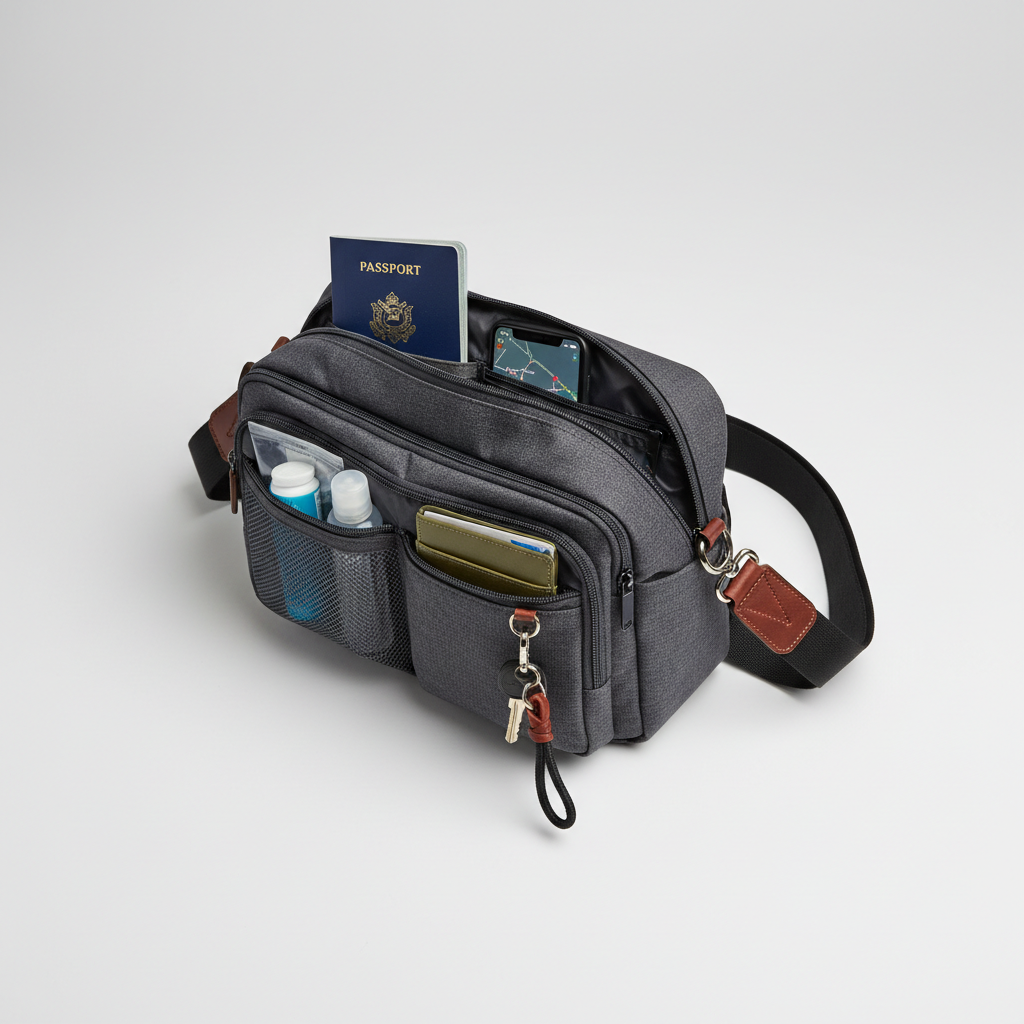
- Back wall (closest to your body): passport, cash, flat items.
- Center: phone and wallet, because you grab them constantly.
- Front or top-access pocket: lip balm, tissues, earbuds, items you don’t want to dig for.
- Keys: clip them if there’s a leash, if not, put them in a small pocket so they don’t scratch screens.
If you carry a power bank, choose a slim one. A chunky battery turns a small bag into a brick, and you’ll feel it on your shoulder after a few miles.
Common mistakes to avoid (small bag edition)
Some mistakes are subtle, and they’re why people buy a “nice” bag and still stop using it.
- Over-optimizing for anti-theft and ending up with a bag that’s too slow to access at gates and ticket kiosks.
- Buying stiff material that looks structured but doesn’t flex, small bags often need a little give.
- Wearing it too low, which increases bounce and makes it easier for someone to bump it open.
- Ignoring weather, light rain happens, a water-resistant finish helps more than people expect.
Also, be honest about your phone size. If you use a max-size phone with a thick case, many “small” options turn into a tight squeeze.
When it makes sense to get expert help or upgrade your setup
If you’re traveling somewhere with high crowd density, carrying important documents, or you’ve had a theft issue before, it may be worth talking to an experienced travel retailer or choosing a more security-forward design. The “right” level of protection varies by destination and habits, and no bag replaces situational awareness.
If you have shoulder, neck, or back pain, a compact crossbody can still aggravate it depending on strap shape and load distribution. In those cases, it’s reasonable to test alternatives like a small sling worn across the chest, or ask a medical professional for guidance on carrying weight comfortably.
Key takeaways (so you can choose faster)
- A travel crossbody bag small should still fit phone, wallet, and passport without forcing the zipper.
- Comfort comes from strap width, adjustability, and how high the bag sits on your body.
- Security features help most when they stay usable, a secure bag you hate opening becomes its own problem.
- Layout beats raw liters, pockets and a wide opening matter more than you think.
Conclusion: pick small, but pick smart
The best small crossbody is the one you forget you’re wearing, until you need your ID or phone and it’s right where you expect it. Start by listing your true essentials, then choose a layout that keeps them separated and easy to access, and don’t underestimate strap comfort.
If you want a simple next step, empty your current daily bag, keep only what you used last week, then measure that stack. It’s a quick reality check that makes shopping for a compact crossbody much less guessy.
FAQ
What size counts as a small travel crossbody bag?
There isn’t a universal standard, but many small travel options are built to fit a passport, phone, and slim wallet without extra bulk. If a bag can’t fit your passport flat, it’s probably “mini” rather than travel-small.
Is RFID blocking necessary in a small crossbody?
It depends on your comfort level and where you travel. RFID concerns are real in some contexts, but many people choose a simple RFID sleeve for cards instead of requiring the whole bag to be shielded.
How should I wear a crossbody for safety in crowded places?
Most travelers prefer wearing it across the body with the pouch in front, around the front hip or rib area. Keeping zippers facing inward and minimizing dangling items can also help.
Can a small crossbody replace a daypack?
Sometimes, yes, for city breaks where you don’t need water, layers, or camera gear. If you regularly carry a bottle, umbrella, or cardigan, a small crossbody may feel limiting by mid-afternoon.
What materials hold up best for travel?
Nylon and coated fabrics are common because they’re lightweight and often water-resistant. Leather can work and look great, but it usually adds weight and may need more care in rain.
What’s the best way to keep it comfortable on long walks?
Keep the load light, avoid hard bulky items, and adjust the strap so the bag sits higher and doesn’t swing. If your shoulder feels sore quickly, a wider strap or a slightly larger bag that distributes items better can help.
Should I choose an exterior pocket for my phone?
Exterior phone pockets are convenient, but some travelers prefer interior pockets in crowded environments. A good compromise is a body-side pocket that’s quick for you to reach but awkward for others.
If you’re trying to narrow choices and you want a more “no surprises” setup, start by matching the bag to your daily carry and your most crowded moments, airports, subways, festivals, then prioritize comfort and access before you get pulled into purely aesthetic details.