
Water bottle travel insulated choices make or break cold drinks on the road, because a “good-looking” bottle can still sweat, leak, or warm up fast in real travel conditions.
If you’ve ever pulled a bottle from a backpack and found your iced water tasting like room temp, it’s usually not just bad luck, it’s a mix of bottle design, how you fill it, and how you pack it.
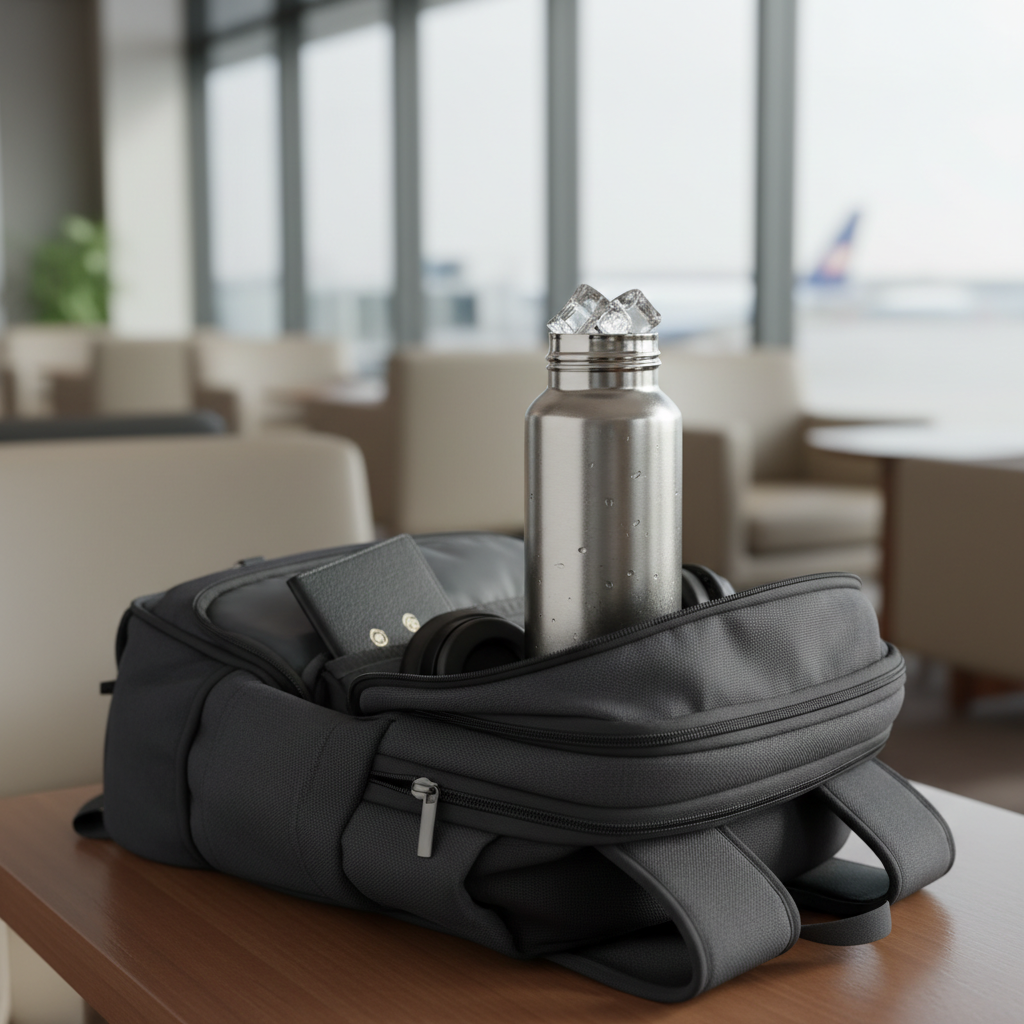
This guide focuses on what actually helps cold retention while traveling, how to choose the right build for flights, road trips, and day hikes, plus a few easy routines that keep drinks cold longer without overthinking it.
Why travel makes cold drinks warm faster than you expect
Most people blame the bottle, but travel adds extra “heat load” that your bottle must fight the whole day. A strong insulated bottle matters, but so does the situation around it.
- Heat exposure in bags and cars: a backpack in the sun, a car seat, or a trunk can turn into a warm box, even with A/C earlier.
- Frequent opening: every sip swaps cold air for warm air, and warm air carries moisture that melts ice faster.
- Warm bottle walls at the start: fill a room-temp bottle with ice, and the metal steals cold right away.
- Not enough ice-to-liquid ratio: a few cubes look nice, but they disappear quickly; more ice is usually the difference.
According to the CDC, bacteria can grow quickly when food or beverages sit in the “danger zone” temperatures for long periods, so for dairy drinks, smoothies, or anything perishable, keeping it cold is more than comfort, it can be a safety habit, and when in doubt you should follow label guidance or ask a qualified professional.
A quick self-check: what kind of traveler are you?
Before buying anything, it helps to be honest about how you travel. Different patterns need different features.
- Airport / commuter: you need leak resistance, one-hand drinking, fits cup holders, and minimal sweating on laptops.
- Road-trip / car-based: you need cup-holder compatibility, easy cleaning, and a lid that won’t pop open over bumps.
- Outdoor / hiking: you need lighter weight, tough exterior, and a carry loop that won’t fail.
- Gym / studio: you need fast flow (wide sip), no weird aftertaste, and quick rinse cleaning.
If your pain point is mostly “ice dies by noon,” prioritize insulation and fill habits. If it’s “my bag is wet” or “it leaked once and I’m done,” prioritize lid design and gasket quality.
What to look for in a travel insulated bottle (without getting tricked by marketing)
For most people, the practical sweet spot is stainless steel, double-wall vacuum insulation, and a lid that matches your daily use. The rest is details that matter more than you’d think.
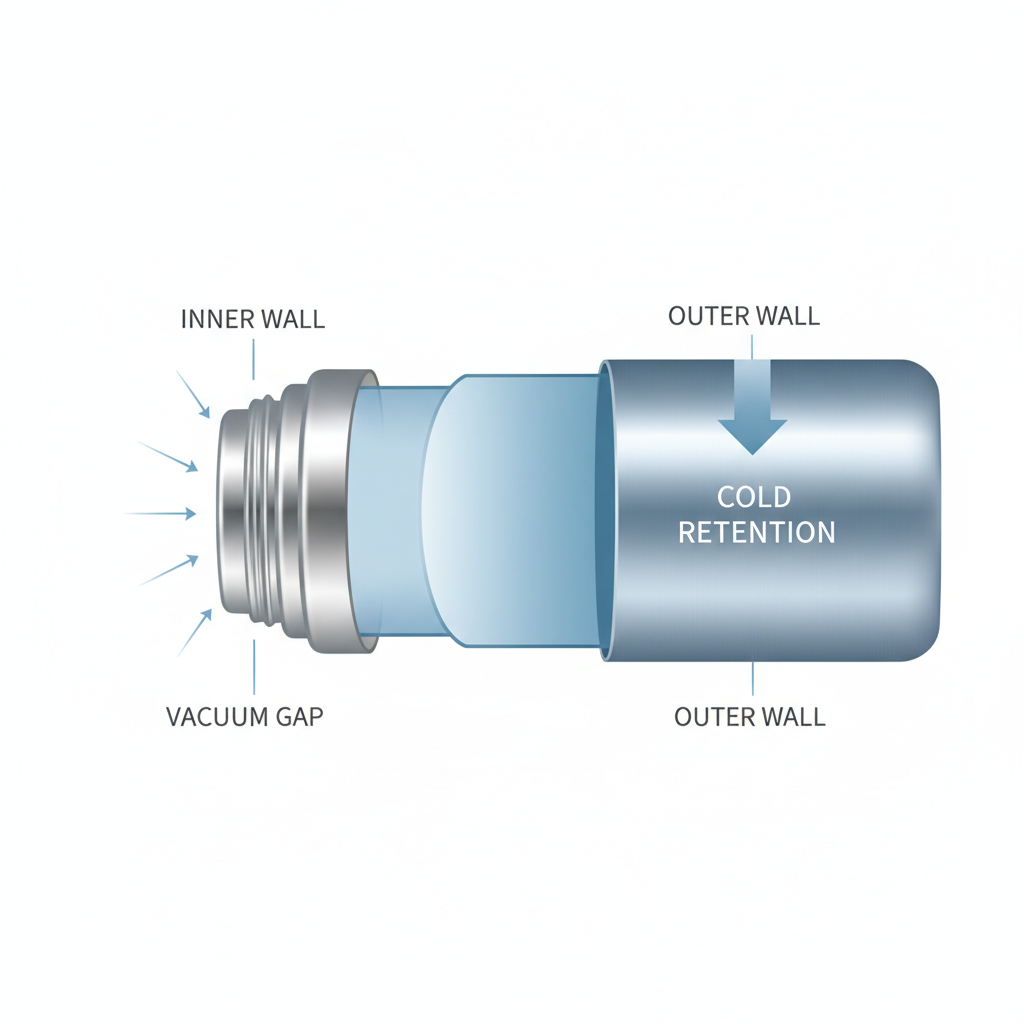
Core build features that usually matter
- Double-wall vacuum insulation: this is the baseline for serious cold retention in a water bottle travel insulated setup.
- Powder coat or grippy exterior: helps with drops and sweaty hands, and feels better in daily carry.
- Quality gasket (O-ring): a small rubber ring often decides whether your bag stays dry.
- Wide mouth vs. narrow mouth: wide mouth loads ice easily, narrow mouth sips neatly; pick based on how you actually drink.
Nice-to-have features (useful, but not for everyone)
- Straw lid: convenient for driving, but may insulate slightly less than a fully sealed cap.
- Locking flip lid: helpful for bags, strollers, and gym toss-around life.
- Anti-slip base: quieter in offices, less likely to tip in car cup holders.
Size, shape, and lid: a practical comparison table
Choosing travel gear is usually about tradeoffs. This table can save you a lot of “I didn’t think about that” regret.
| Use case | Best size (typical) | Shape to prioritize | Lid style that tends to work | Watch-outs |
|---|---|---|---|---|
| Airports + commuting | 18–24 oz | Slender (cup holder / side pocket) | Locking flip or sealed sip | Leaks in overhead bins, sweating on electronics |
| Road trips | 24–32 oz | Cup-holder friendly base | Straw or flip lid | Hard-to-clean lids, bounce spills |
| Hiking / outdoors | 20–32 oz | Lightweight, durable shell | Twist cap + carry loop | Extra weight, denting, dust in straw tips |
| Desk + gym | 24–40 oz | Stable base, easy grip | Fast-flow sip or straw | Odor buildup if cleaning slips |
How to keep drinks colder longer: simple steps that actually help
Even a solid bottle performs better with a few small habits. Most are low effort, and you feel the difference the same day.
- Pre-chill the bottle: add cold water for 2 minutes, dump it, then fill with ice and your drink. It reduces the initial melt.
- Use more ice than you think: for true “all day cold,” a higher ice ratio usually beats extra insulation.
- Top with very cold liquid: fridge-cold water outperforms tap water that sat warm on the counter.
- Limit lid-open time: sip, close, move on. Leaving it open while walking around burns ice fast.
- Pack smart: keep the bottle in the center of the bag, away from the outer panel that heats up in sun.
If you travel in very hot regions, wrapping the bottle in a light layer (even a thin shirt) inside your bag can reduce radiant heat, it looks silly, but it works.
Travel safety, cleaning, and “taste issues” (the part people ignore)
A water bottle travel insulated routine should include cleaning, because cold bottles often sit longer between washes, and lids are where odors start.
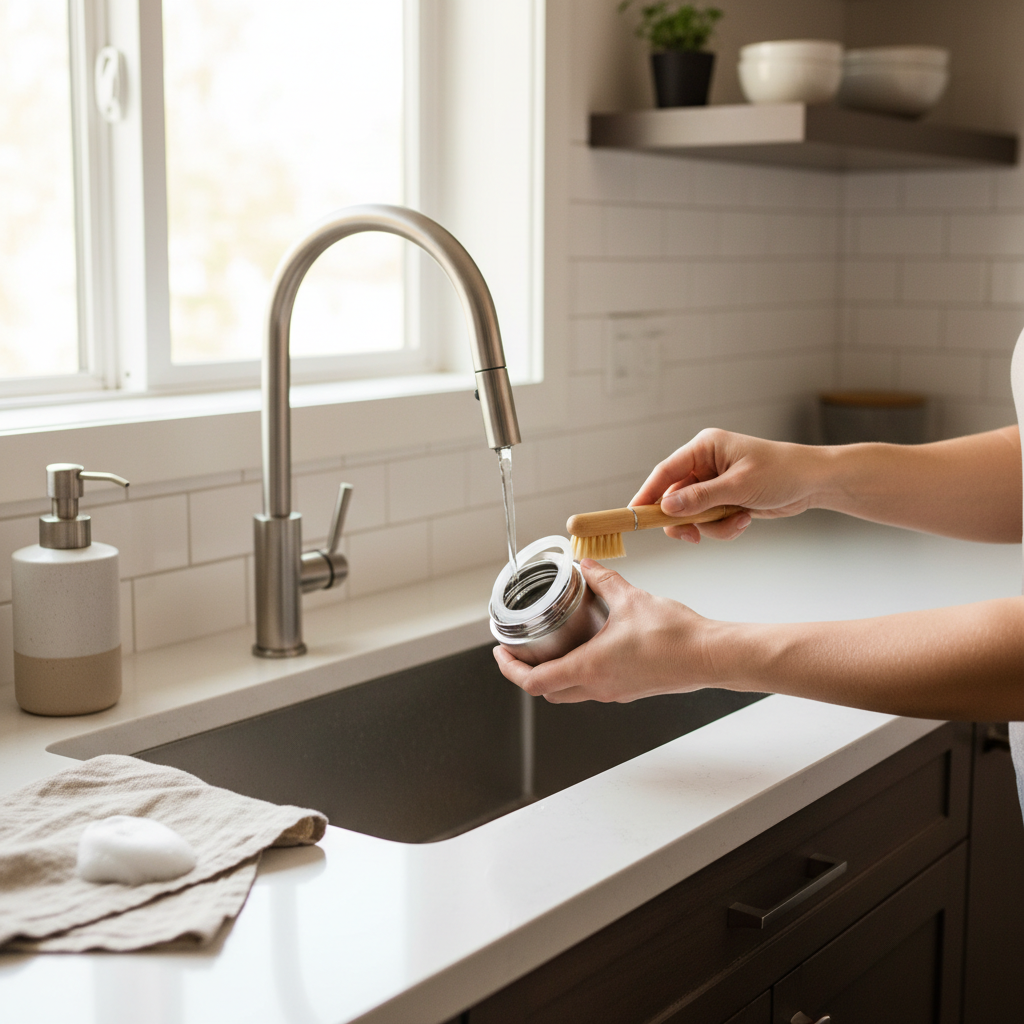
Cleaning checklist (fast, realistic)
- Rinse daily if used for water, wash with mild dish soap regularly.
- Remove the gasket and clean underneath, grime hides there.
- Use a bottle brush for the shoulder area where residue clings.
- Air-dry fully with the lid off to reduce odor.
If your bottle makes water taste “metallic”
- Try a baking soda soak (if manufacturer guidance allows), then rinse well.
- Check if you store citrus or flavored drinks for long periods, they can cling to seals.
- Replace worn gaskets, older rubber can hold smells.
For smoothies, protein drinks, or anything dairy-based, don’t treat an insulated bottle like a fridge. If you’re unsure about safe holding time, it’s smarter to follow food-safety guidance and, when needed, consult a professional.
Common mistakes that lead to warm drinks or leaks
- Assuming “insulated” means spill-proof: insulation and leak resistance are different design problems.
- Over-tightening lids: it can twist gaskets out of place, then it leaks anyway.
- Using a straw lid in a packed bag: many are fine upright, but unreliable when sideways.
- Dishwasher heat on lids: some plastics warp, then seals stop sealing. Check care instructions.
- Ice blocking the sip path: wide ice can jam certain lids, leading to messy “surge” sips.
Key takeaways before you buy your next bottle
- Vacuum insulation + a dependable lid usually matters more than fancy add-ons.
- Pick size and shape for where it lives most: bag pocket, cup holder, or hand carry.
- Cold performance improves a lot with pre-chill, more ice, and less lid-open time.
- Clean the lid and gasket routinely, that’s where most “gross bottle” problems begin.
If you want one action today, do the pre-chill plus heavier ice fill once, it’s the quickest way to see whether your current bottle is truly underperforming or your routine is working against it.
FAQ
What does “vacuum insulated” actually do for cold drinks?
It reduces heat transfer between the outside air and your drink by using a vacuum layer between two walls. In travel, it mainly slows down warming from your bag, your hands, and hot ambient air.
Is a straw lid bad for keeping drinks cold?
Not always, but many straw designs allow a bit more air exchange and have more parts that can warm up. If cold retention is your top priority, a fully sealed cap often performs better in real use.
Why does my bottle sweat if it’s insulated?
Heavy sweating usually suggests the insulation seal is compromised, or the bottle is single-wall. Some light condensation near the lid can still happen, because lids are commonly less insulated than the body.
How do I stop an insulated bottle from leaking in my backpack?
Check the gasket placement, tighten to snug rather than extreme, and pressure-test it at home by filling, sealing, and laying it on a paper towel for 10 minutes. For bags, locking lids or simple screw caps tend to be more dependable.
What size is best for flights and TSA?
Most travelers bring an empty bottle through security and fill after. A slimmer 18–24 oz size is easier for seat pockets and personal items, while still giving enough cold water for a long boarding stretch.
Can I put sparkling water or soda in an insulated bottle?
Many people do, but carbonation increases pressure, and some lids are not designed for it. If you try it, open slowly, keep upright, and follow the manufacturer’s guidance to reduce spill risk.
How often should I replace the gasket?
When it looks stretched, cracked, or holds odor even after cleaning, replacement is usually worth it. Many brands sell inexpensive gasket sets, and it can restore leak resistance more than you’d expect.
If you’re trying to standardize a travel setup, for example one bottle that fits your car cup holder, doesn’t leak in a work bag, and still keeps ice solid through errands, it may help to shortlist two lid styles and test them with your real routine before committing to a “forever bottle.”