
What to pack for a cruise vacation comes down to three things: your ship’s vibe, your itinerary, and how much you want to think once you’re onboard.
Most packing stress comes from not knowing what you’ll actually need at sea versus in port, plus a few cruise-specific rules like carry-on timing and dinner dress codes. If you pack like it’s a generic beach trip, you’ll usually miss a couple of items that matter on ships, and you’ll bring too many that never leave the closet.
This guide gives you a realistic, do-this-not-that list, a quick decision checklist, and a table you can screenshot. You’ll also see where it’s worth being a little “extra” (like meds and documents) and where you can stay minimal.
Cruise packing basics that change everything
The best cruise packing starts with a few practical assumptions: cabins run smaller than most hotel rooms, storage is limited, and you may not see your checked bag for hours after boarding. That means a smart carry-on matters more than on many other trips.
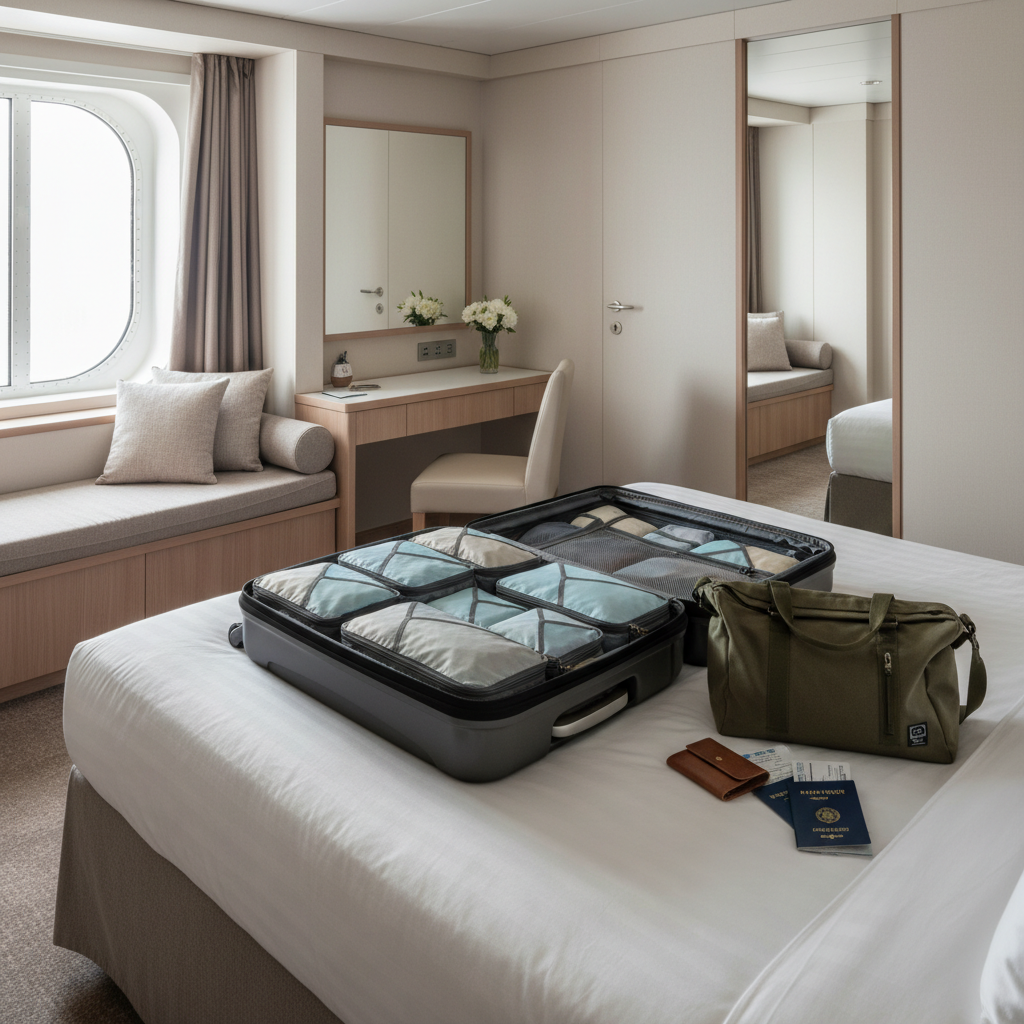
Also, cruise lines vary. Some lean casual, some enforce a more formal evening vibe, and some itineraries practically require a lightweight jacket even in summer. Before you buy anything, check your cruise line’s dress guidance and luggage rules.
According to CDC, cruise travelers should be up to date on routine vaccines and review destination-specific health advice before travel. That’s not a packing list item by itself, but it affects what you bring, especially medications and documentation.
Quick self-check: what kind of cruise are you packing for?
Before you start piling clothes on the bed, answer these quickly. Your yes/no mix determines whether you pack “lean” or “prepared.”
- Are you visiting multiple ports? You’ll need comfortable walking shoes, a day bag, and heat or rain layers.
- Do you have at least one dressy dinner or specialty restaurant? Plan one or two evening outfits that match the dress code.
- Is it a warm-weather itinerary with lots of pool time? Bring extra swimwear so you’re not waiting on wet suits to dry.
- Is the cruise in Alaska, Northern Europe, or shoulder season? Prioritize layers and a wind-resistant outer layer.
- Do you get motion sickness or migraines? Pack your preferred remedies, because onboard options may be limited or pricey.
- Are you flying in? Add a “day 0” outfit and essentials in carry-on in case luggage arrives late.
The core checklist: documents, money, and must-not-forget items
If you forget a cute top, you’ll survive. If you forget the essentials below, your trip can get complicated fast.
Travel documents and access
- Passport (even when not strictly required, it often makes re-entry and emergencies easier)
- Government ID and cruise boarding documents
- Travel insurance details, if you purchased a plan
- Credit card and a backup payment method
- Cash for tips in ports and small purchases
Health and comfort essentials
- Prescription medications in original containers, plus a short buffer supply if possible
- Over-the-counter basics: pain reliever, antacid, allergy meds
- Motion sickness option (bands, ginger, or medication; if you use meds, consider asking a clinician what fits your situation)
- Sunscreen and SPF lip balm, especially on beach itineraries
- Hand sanitizer and a small pack of disinfecting wipes
According to U.S. Department of State, travelers should keep passports secure, consider copies of key documents, and plan for emergencies. A simple photo backup in a secure cloud folder can save time if something goes missing.
What to wear on a cruise: a realistic outfit plan
If you’re stuck on what to pack for a cruise vacation, build outfits around scenarios: sea days, port days, dinners, and one “just in case” look. That’s more reliable than packing random pieces.
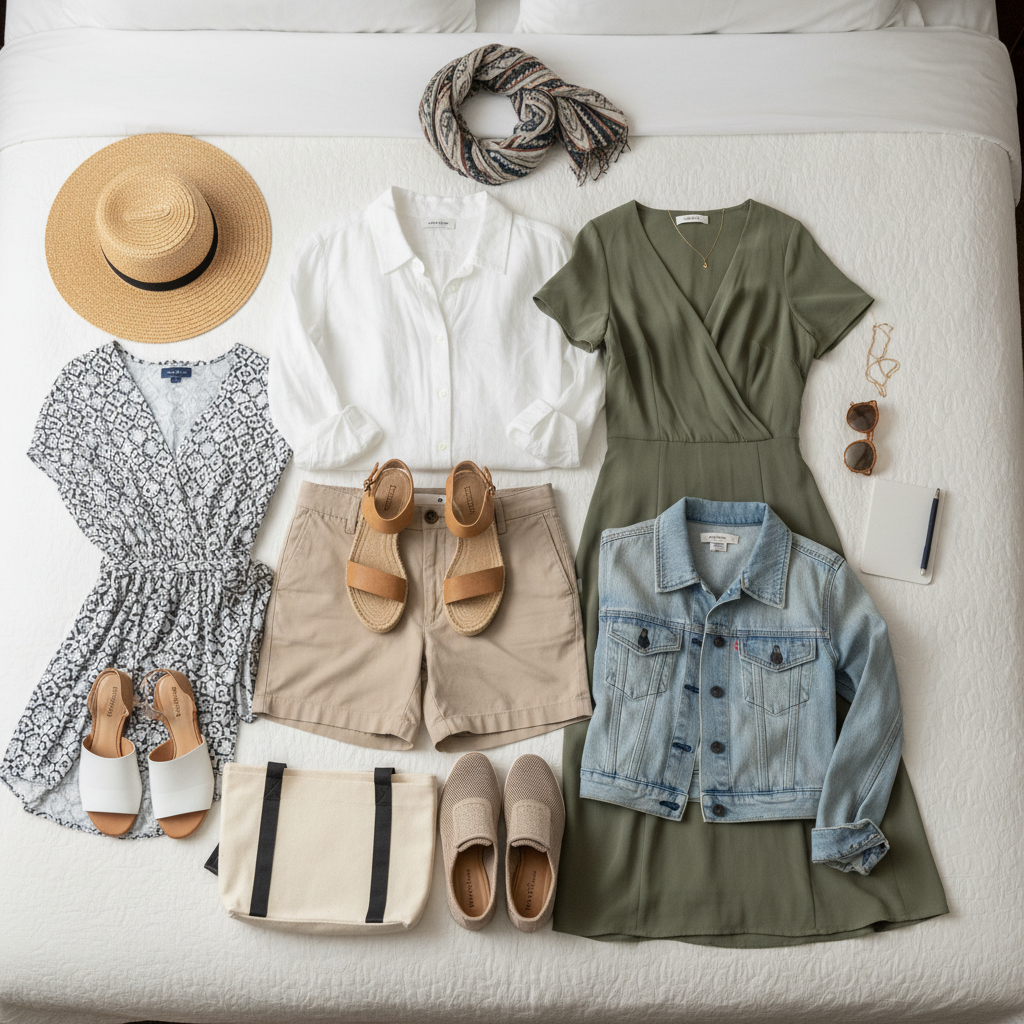
Sea days (onboard)
- 2–3 casual outfits for lounging, trivia, shows, and coffee runs
- 1 light layer for windy decks and strong A/C indoors
- Swimwear, cover-up, and sandals or water-friendly slides
Port days (off-ship)
- Comfort-first walking shoes (broken-in, not brand new)
- Breathable tops and bottoms, plus a packable rain layer if forecast looks mixed
- Sun hat and sunglasses for warm-weather ports
Dinners and evenings
- 1–2 dressier outfits that align with your ship’s dress code
- One nicer pair of shoes, ideally comfortable for stairs and longer walks onboard
- A light sweater or wrap for theaters and dining rooms
If your cruise includes a formal night, you don’t always need a full gown or tux. Many lines accept “formal-ish” looks, but the exact standard varies, so check your line’s guidance before you overpack.
Packing table you can screenshot (by category)
Use this as a base, then adjust for climate and cruise length. The goal is a tight kit that covers most scenarios without duplicates.
| Category | Bring | Notes |
|---|---|---|
| Carry-on | Documents, meds, swimsuit, change of clothes, phone charger | Checked bags may arrive later, so pack for a half day onboard |
| Clothing | 3–5 casual outfits, 1–2 dinner outfits, layers | Plan outfits around sea days vs ports |
| Swim & sun | 2 swimsuits, cover-up, sunscreen, hat | Two suits helps with drying time |
| Shoes | Walking shoes, sandals, dinner shoes | Keep it to 2–3 pairs unless itinerary demands more |
| Toiletries | Basics + seasickness and blister care | Ship shops can be limited and expensive |
| Electronics | Chargers, power strip (non-surge), headphones | Some lines restrict surge protectors, verify rules |
| Day bag | Small backpack or crossbody, reusable bottle | Useful for excursions and embarkation day |
Cruise-specific items people forget (and regret)
These are the little things that don’t feel important until you’re already onboard, and then you wish you had them.
- Magnetic hooks for extra hanging space (many cabin walls are metal)
- A small nightlight for the bathroom run in a dark cabin
- Refillable water bottle, especially if you do excursions
- Wrinkle-release spray for dinner outfits
- Small first-aid kit: blister patches, bandages
- Reef-safe sunscreen for destinations that require it
One caveat: some cruise lines restrict certain items (like irons, steamers, and surge-protected power strips). If you’re unsure, check the prohibited-items list before you pack.
Step-by-step: how to pack without overpacking
This is the part that sounds easy, but it’s where most people spiral. A simple method keeps it under control.
1) Start with a 3-part clothing plan
- Base layer outfits for daytime
- One layer for wind or A/C
- One nicer evening capsule
2) Build outfits, not items
Lay out complete looks (top, bottom, shoes) for each day type, then stop. If a piece doesn’t fit into at least two outfits, it usually stays home.
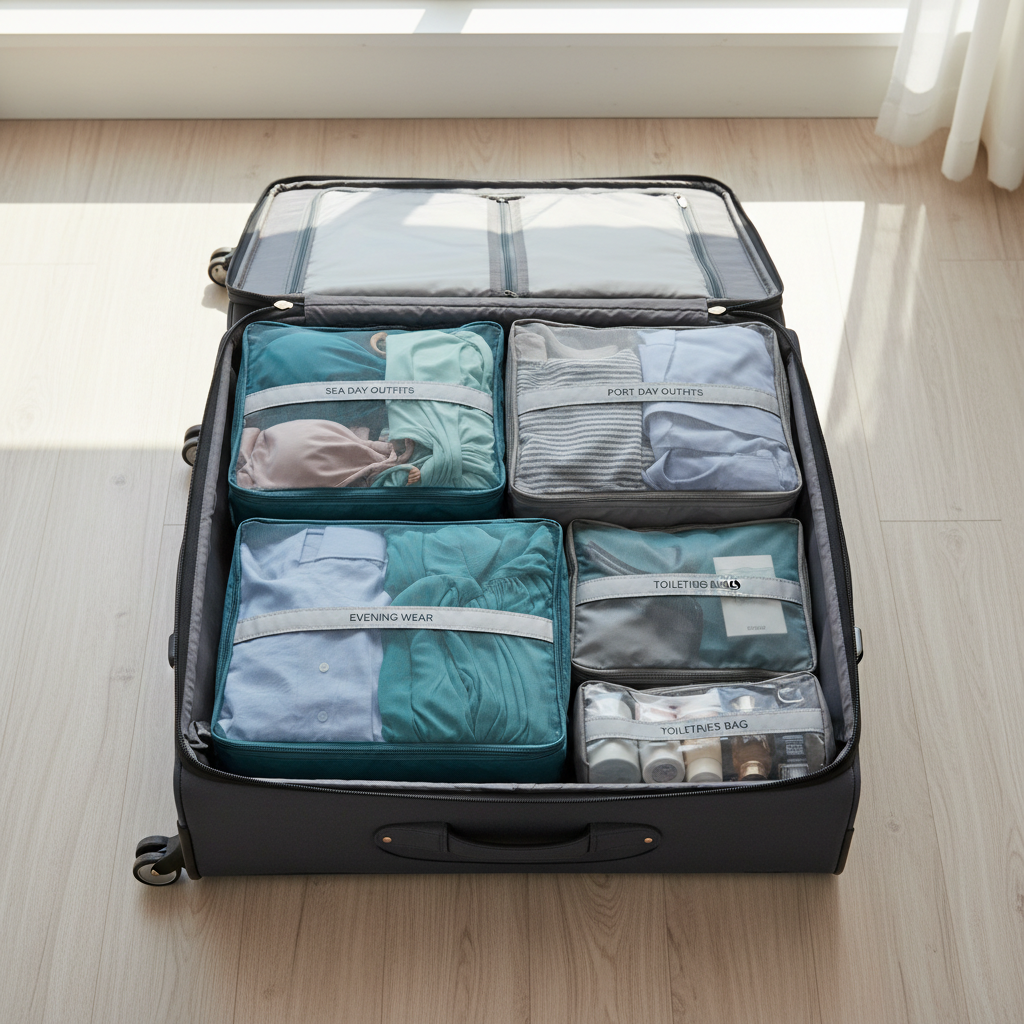
3) Keep a disciplined shoe limit
Many overpacked suitcases are really “shoe problems.” In lots of cases, one walking shoe, one sandal, one dinner shoe covers the whole trip.
4) Pack the carry-on like a mini survival kit
- Swimsuit and cover-up so you can use the pool even before bags arrive
- Medications and anything you cannot replace quickly
- Phone charger and a small snack
Safety, health, and money: practical notes before you zip up
Cruises are generally straightforward, but a few prep steps reduce stress. If you have specific medical conditions, it’s sensible to check with a clinician about motion sickness meds, heat exposure, or activity limits.
- Sun and heat: sea breezes can hide how strong the sun feels, reapply sunscreen more often than you think
- Hydration: excursions plus salty air can dry you out, carry water when allowed
- Security: use the cabin safe for passports and backup cards when practical
- Payments: verify foreign transaction fees and set travel notifications if your bank recommends it
Key takeaways (so you can pack today)
- What to pack for a cruise vacation depends on sea days, port days, and your ship’s evening dress expectations.
- Prioritize carry-on essentials because checked bags may arrive after you board.
- Pack outfits by scenario and cap shoes at 2–3 pairs for most itineraries.
- Don’t skip cruise-specific helpers like a light layer, blister care, and a day bag.
If you want one action step: pull up your cruise line’s dress code and prohibited-items list, then build a short outfit plan for sea days, port days, and dinners. Once that’s done, packing feels a lot less like guesswork.