
Best travel curling iron dual voltage picks aren’t just about “will it turn on overseas”, they’re about whether it heats predictably, packs without drama, and won’t surprise you with a fried plug in a tiny hotel bathroom.
If you’ve ever landed in Europe, plugged in your tool, and watched it barely warm up, you already know the pain. A true dual-voltage curling iron can remove a whole layer of travel anxiety, but only if you understand the difference between voltage switching and plug adapters, and what “universal” actually means.
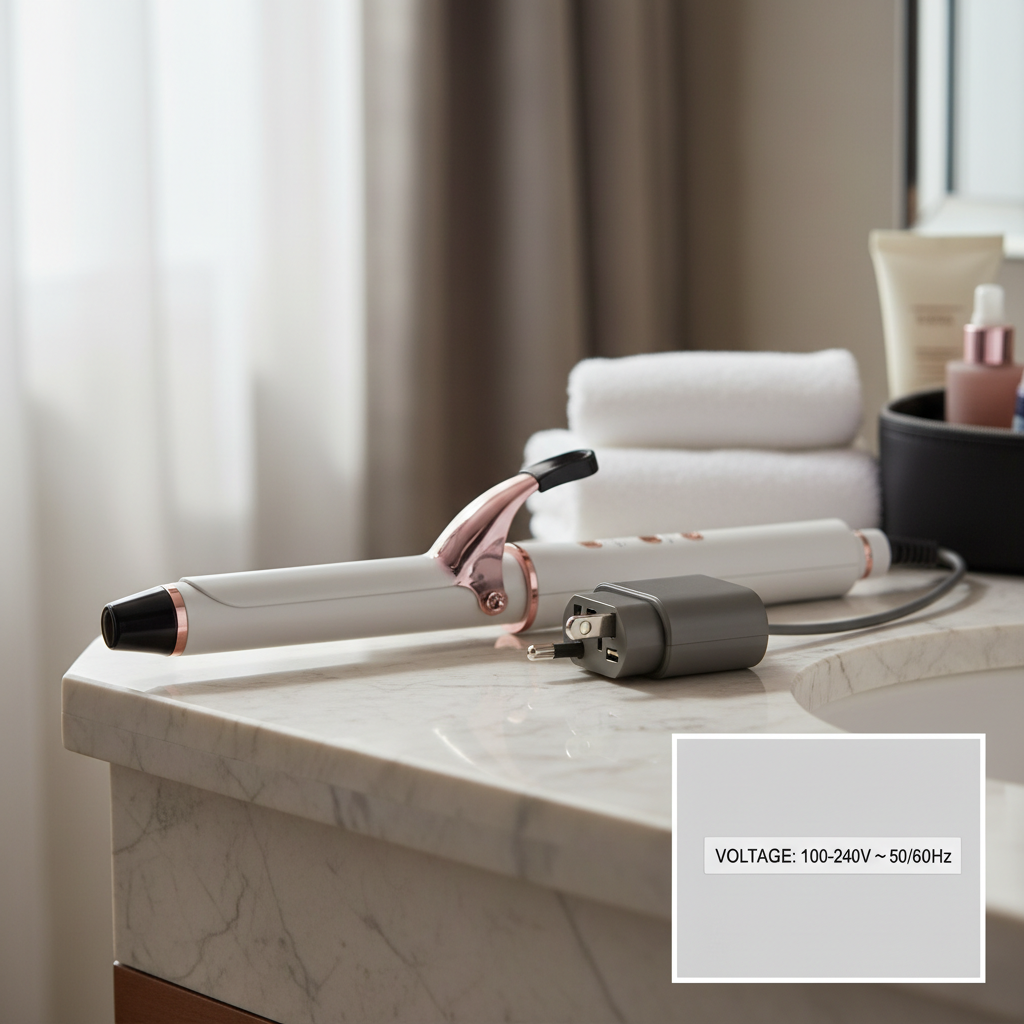
This guide focuses on what usually matters in real packing situations: voltage range, barrel size, heat control, cord behavior, and safety. I’ll also share a quick self-check so you can decide whether you need a compact iron, a mini wand, or you’re better off borrowing at your destination.
What “dual voltage” really means (and what it does not)
Dual voltage means the tool can operate on both common electrical standards: roughly 110–120V (U.S., Canada) and 220–240V (many parts of Europe, Asia). In practice, you want to see “100–240V” printed on the handle or power brick, not just marketing copy.
What it does not mean is “works everywhere with no accessories.” You still need the correct plug adapter so the prongs fit the outlet. And if you accidentally bring a tool that only supports 120V, an adapter won’t save it.
According to the U.S. Department of Energy, many countries use different voltages and frequencies, and travelers should check device labels and use the right equipment for the destination. That’s the boring part, but it’s also the part that prevents melted plastic and dead tools.
Quick checklist: how to tell if your curling iron is truly travel-ready
Before you buy anything, check what you already own. A lot of “travel problems” are really labeling problems.
- Voltage range on the label: Look for 100–240V. If it says 120V only, it’s not a dual-voltage model.
- Switching type: Some tools are automatic dual voltage, others have a small 110/220 switch. A switch is fine, but it’s one more thing you can forget at 6 a.m.
- Wattage: Higher wattage heats faster but can trip weak hotel circuits. Many travel-friendly tools sit in a moderate range; exact “safe” wattage varies by property.
- Barrel size: 1 inch is a flexible “do most things” size, while 1.25 inch leans looser, and 0.75 inch leans tighter and shorter-hair friendly.
- Heat control: At least 2–3 heat settings or a dial. One-temperature tools can be harsh on fine hair.
- Cord: A swivel cord reduces tangling in cramped spaces.
What makes the best travel curling iron dual voltage (shopping criteria that actually matter)
When people search for the best travel curling iron dual voltage, they often get stuck comparing brand names. I’d prioritize a few practical criteria first, then pick the brand that meets them.
1) Automatic dual voltage vs. manual switch
Automatic is less error-prone. Manual can be perfectly reliable, but it increases the odds of a wrong setting, especially if you’re jet-lagged and moving fast.
2) Barrel and clamp style: iron vs. wand
- Clamp iron: Easier for polished curls and smoothing ends, friendlier if you’re used to a classic curling iron.
- Wand: Often lighter and shorter, good for beachy texture, but requires a bit more coordination.
3) Temperature behavior (not just max heat)
More heat isn’t automatically better. For travel, you want stable heating and recover time between sections. Some mini tools advertise high temps but cool down fast when you work quickly.
4) Size, cap, and case
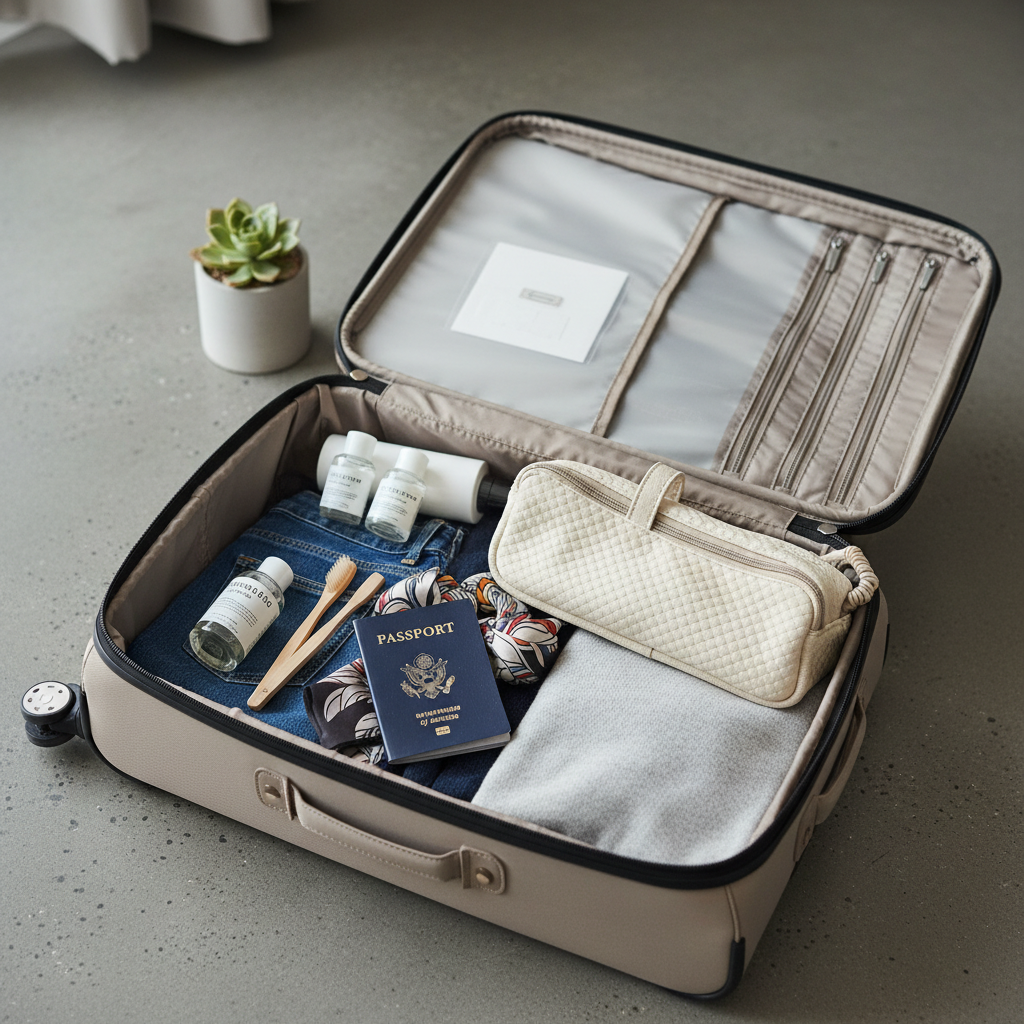
A travel tool should pack without scorching your toiletries. A heat-resistant cap or pouch is a small feature that becomes a big deal when you’re checking out in a rush.
Comparison table: features to look for (and why)
Use this as a reality check when you’re reading product pages that all sound the same.
| Feature | What to look for | Why it matters for travel |
|---|---|---|
| Voltage | 100–240V on the label | Prevents under-heating or damage abroad |
| Switching | Automatic preferred, manual OK | Reduces setup mistakes in unfamiliar rooms |
| Barrel size | 0.75–1.25 inch depending on style | Controls curl tightness without extra tools |
| Heat settings | Multiple settings or adjustable dial | Lets you match heat to hair type and damage level |
| Safety | Auto shut-off, heat-resistant cap | Helps in rushed checkout situations |
| Cord | Swivel, adequate length | Less fighting the cord in tight bathrooms |
How to use a dual-voltage curling iron overseas (step-by-step)
This is the part most people skip, then blame the tool. A few small checks prevent most mishaps.
- Read the label first: Confirm it says 100–240V. If you see only 120V, don’t plug it into 220–240V outlets.
- Set the voltage switch if needed: If your model has a 110/220 switch, set it before you plug in.
- Use a plug adapter, not a converter: Dual-voltage tools usually need only an adapter. A converter is for single-voltage devices, and many are not designed for high-heat appliances.
- Pick a sensible heat setting: Fine or color-treated hair often behaves better at moderate temps, while thicker hair may need more. If you’re unsure, start lower and adjust.
- Give it a full preheat: Mini tools can be slower than full-size. Rushing early leads to repeated passes, which can be harsher on hair.
- Test one small section: If it’s not curling at all, stop and re-check the voltage setting and outlet type.
According to the U.S. Consumer Product Safety Commission (CPSC), heat styling tools can cause burns and fires if misused, so keeping them on stable surfaces and unplugging promptly is a sensible baseline. If you have any medical concerns about burns or scalp sensitivity, it’s smart to ask a healthcare professional.
Common mistakes (and why they keep happening)
Most failures aren’t “bad product,” they’re predictable travel mix-ups.
- Assuming an adapter converts voltage: It only changes the plug shape.
- Buying “dual voltage” without checking the label: Listings can be vague, the device label is the source of truth.
- Using a cheap converter with a hot tool: Many converters are not meant for high-wattage heating appliances, which can lead to overheating.
- Expecting identical performance everywhere: Some hotel circuits are weak, and voltage quality can vary. If heat seems inconsistent, try another outlet and avoid daisy-chaining with other high-draw devices.
- Overpacking accessories: You typically need one good adapter and a heat-safe pouch, not a whole bag of gadgets.
Practical recommendations by hair type and trip style
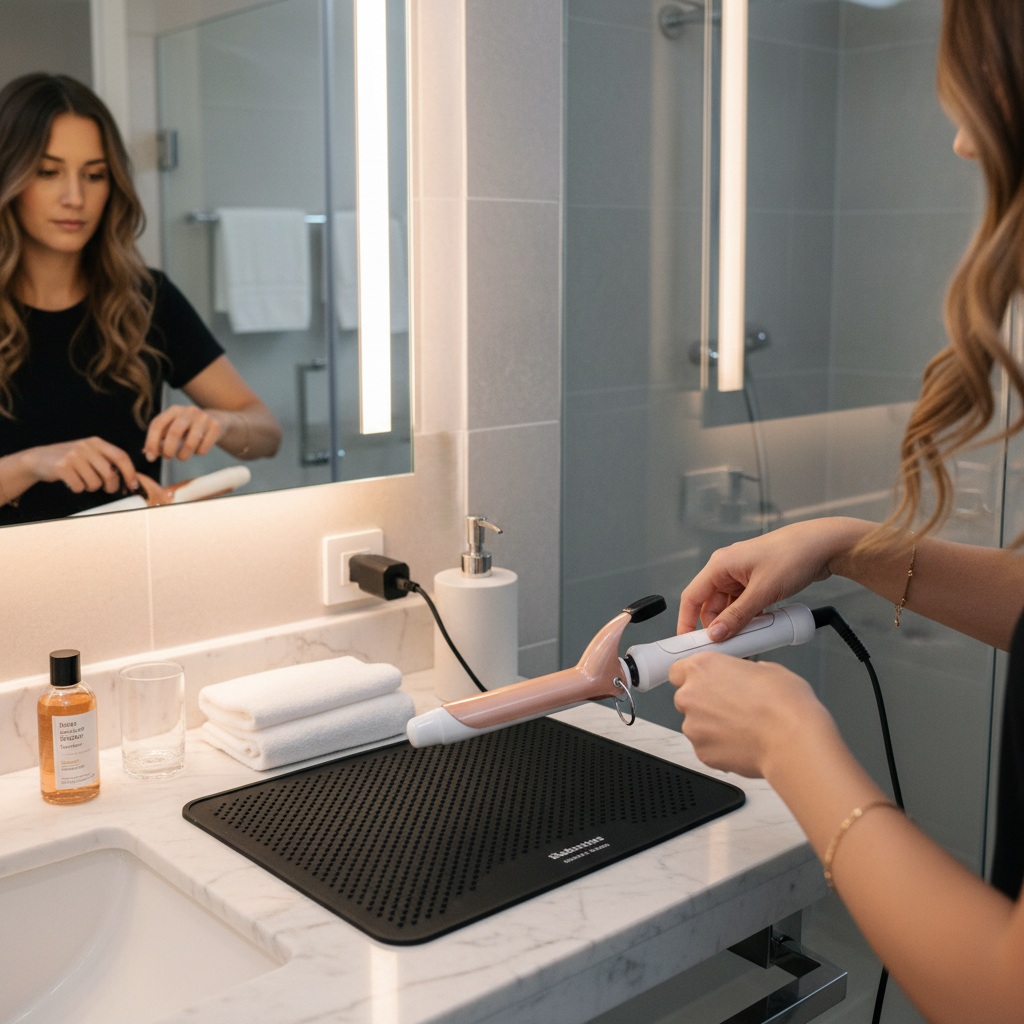
You don’t need the same tool for a two-day work trip and a three-week multi-country itinerary.
For fine, fragile, or color-treated hair
- Prioritize adjustable heat and consistent temperature behavior.
- Choose a barrel that matches your goal so you don’t “stack” heat with repeated passes.
For thick hair or long hair
- Look for faster heat recovery and a barrel length that can handle larger sections.
- A slightly larger barrel can create softer waves with fewer sections.
For carry-on only travelers
- Shorter body, protective cap, and a cord that doesn’t kink easily.
- If you’re minimal, a wand can save space, but only if you’re already comfortable using one.
For multi-voltage, multi-adapter trips
- Automatic dual voltage becomes more valuable.
- Pack one quality universal adapter and keep it with the iron so they don’t get separated.
Key takeaways before you buy
- The best travel curling iron dual voltage is the one that clearly states 100–240V on the device and matches your styling habits.
- Adapter changes plug shape, converter changes voltage, and confusing them is where things go wrong.
- Adjustable heat and a heat-safe packing solution tend to matter more than “maximum temperature.”
- If you’re frequently abroad, automatic switching is often worth it for simplicity.
Conclusion: choose reliability over hype
If your goal is stress-free styling in different countries, focus on a clearly labeled dual-voltage range, sensible heat control, and travel-friendly packing features, then pick the barrel style you actually know how to use. That combination usually beats chasing whatever tool has the loudest marketing.
Next step: check the label on your current tool today, then decide whether you need an adapter only, or a true upgrade to a dual-voltage travel model before your next trip.