
The best travel skincare kit for dry skin is the one that keeps your barrier comfortable through plane air, climate swings, and “mystery hotel water,” without forcing you to pack your whole bathroom.
If you have dry skin, travel tends to amplify every weak spot, tightness after a long flight, flakes around the nose, stinging when you apply actives, and that frustrating cycle of over-moisturizing then breaking out.
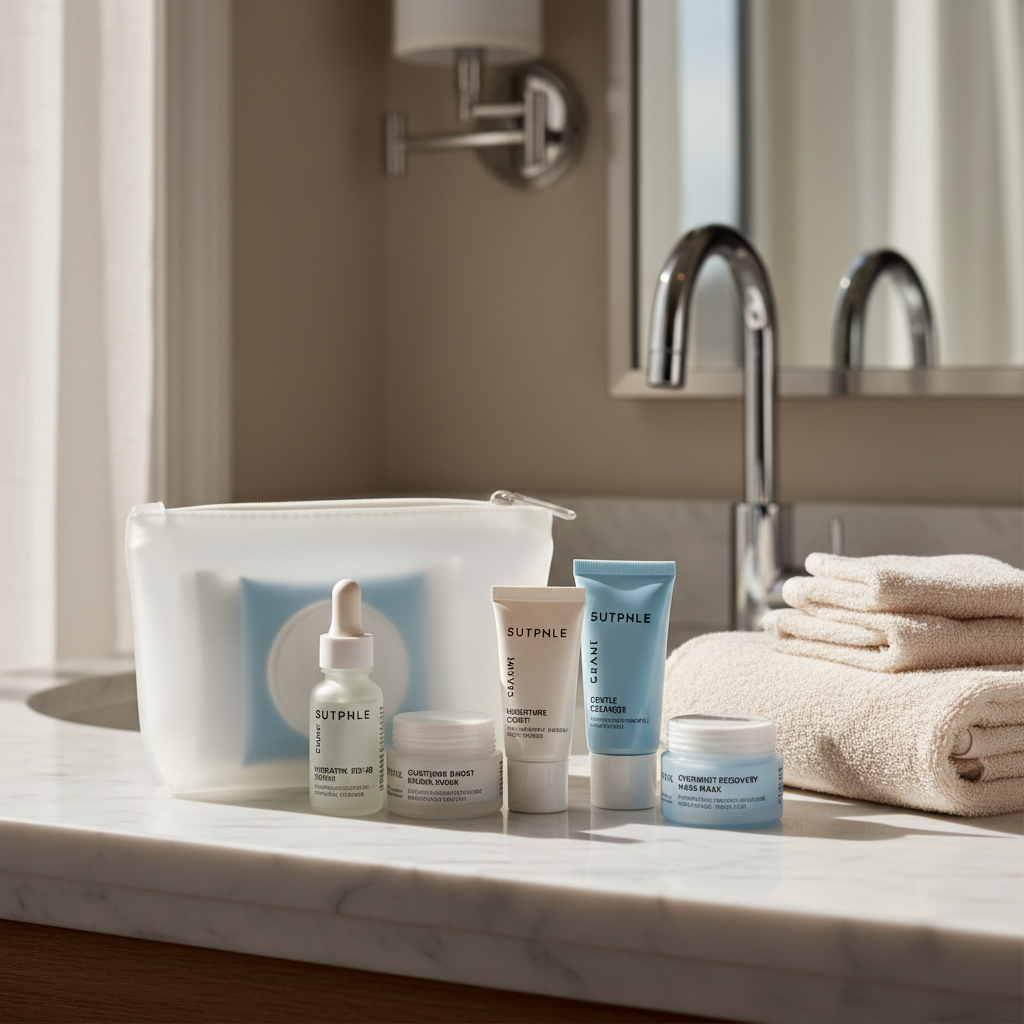
This guide helps you build a compact kit that covers the essentials, shows what to skip, and gives a few ready-to-copy routines for different trip types. You’ll also get a quick checklist so you can tell whether your dryness is mainly dehydration, barrier irritation, or something else.
Why travel makes dry skin feel worse (and what that changes in your kit)
Dry skin on the road rarely comes from one thing. Usually it’s a stack of small stressors that your routine at home quietly compensates for.
- Low cabin humidity and indoor HVAC: skin loses water faster, so products that only “feel creamy” may not hold up.
- More cleansing than usual: sunscreen re-application, sweat, city pollution, hotel makeup wipes, all add up.
- Hard water or unfamiliar water: can leave skin feeling tight, and some people react with irritation.
- Routine disruption: you forget steps, switch products, or try new actives “because it’s vacation.”
According to American Academy of Dermatology (AAD), fragrance-free, gentle cleansers and moisturizers help reduce irritation for sensitive or dry skin, which matters even more when your skin is already stressed by travel.
What a “complete” travel skincare kit for dry skin should include
Think in functions, not product categories. A compact kit can be complete if it covers these jobs reliably.
1) Gentle cleanse (or a cleansing shortcut)
- Option A: a low-foam, fragrance-free cleanser in a 1–2 oz bottle.
- Option B: a micellar water plus soft cotton pads, useful for late nights, but rinse if your skin tends to sting.
If your skin gets tight right after washing, that cleanser is “too effective” for travel.
2) Hydration layer that actually absorbs
- Look for glycerin, hyaluronic acid, panthenol, urea (low %).
- Avoid bringing three watery toners, one is enough.
3) Barrier moisturizer (the workhorse)
- Ingredients that tend to travel well: ceramides, cholesterol, fatty acids, squalane, dimethicone.
- If you get flaky around mouth/nose, consider a thicker cream for nights.
4) Occlusive “seal” for flights and harsh climates
- A small balm or ointment for spot-sealing dry areas, cuticles, lips.
- Petrolatum-based options are common; if you dislike the feel, try a waxy balm.
5) Sunscreen you’ll willingly reapply
- Choose a formula that doesn’t dry you out, many hydrating chemical sunscreens or creamy mineral options fit.
- Bring a travel size that meets TSA rules, and a backup for longer trips.
Optional but useful
- Hand cream (travel + sanitizer dries hands fast).
- Face mist only if you’ll seal it with moisturizer, mist alone can feel good then leave you drier.
- One active max, and only if your skin already tolerates it at home.
Quick self-check: what kind of “dry” are you dealing with?
Dry skin gets lumped into one bucket, but travel decisions get easier when you name the problem.
- Dehydrated-feeling dryness: skin feels tight but looks a bit shiny, fine lines look more obvious, products soak in fast. You usually need more humectants plus a better seal.
- Barrier irritation dryness: stinging, redness, rough patches, sudden sensitivity to products you “normally tolerate.” You usually need fewer actives, fewer fragrance/essential oils, more barrier lipids.
- True flaking dryness: visible flakes, rough texture, makeup clings. You may need a richer night cream and very gentle, infrequent exfoliation if your skin tolerates it.
- Dryness with breakouts: tight yet congested, especially after heavy creams. You may do better with layered hydration + lightweight barrier cream, and spot-occlusive only where needed.
If you suspect eczema, rosacea, or dermatitis, it’s smart to be conservative and consider clinician guidance, because travel can trigger flares.
Kit builder: 3 travel scenarios + exact packing list
Below are three setups. Pick the one closest to your trip, then tweak one item at a time.
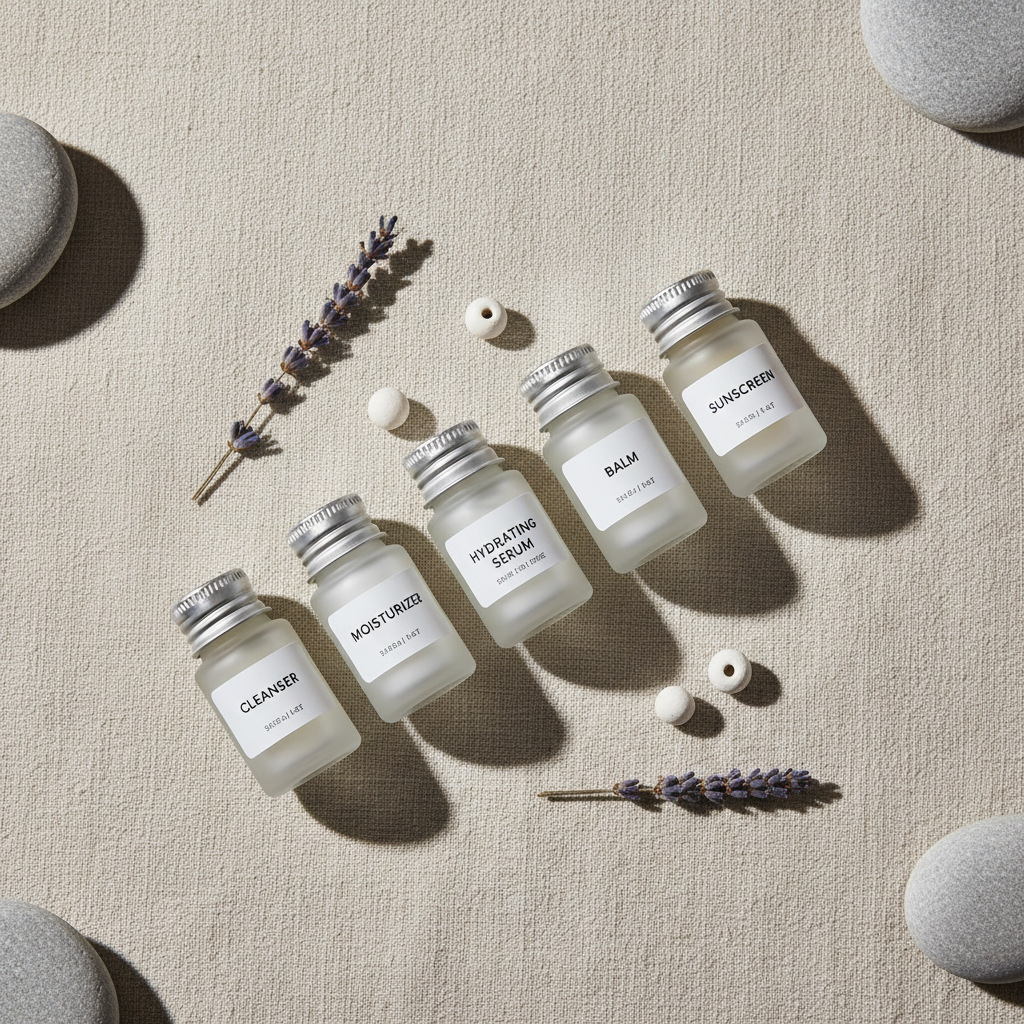
Scenario A: 2–4 day city trip (carry-on only)
- Gentle cleanser (travel bottle)
- Hydrating serum/essence (mini)
- Barrier cream (mini jar or decant)
- Spot balm/ointment (tiny tube)
- Sunscreen (travel size)
- Lip balm
Routine: cleanse at night, hydrate, seal with barrier cream, balm on hot spots. Morning is rinse or light cleanse, moisturize if needed, sunscreen.
Scenario B: Long-haul flight + dry climate (planes, desert, winter)
- Everything in Scenario A
- Extra occlusive (balm you genuinely tolerate)
- Hydrating hand cream
In-flight: skip heavy cleansing, use a small hydration layer, then spot-seal. Reapply lip balm and hand cream. If you’re acne-prone, keep occlusives off areas that clog easily.
Scenario C: Beach or humid destination (dry skin still happens)
- Gentle cleanser
- Hydrator (light)
- Medium moisturizer (not your heaviest)
- Sunscreen (face) + body sunscreen
- After-sun soothing option (fragrance-free gel-cream works for many people)
Here the biggest mistake is over-layering rich products under strong sunscreen, then cleansing too aggressively at night to “remove everything.”
The 2026 checklist: what to look for when buying minis or building your own
If you’re shopping for a premade set or curating travel sizes, these signals help you avoid expensive-but-useless picks.
- Fragrance-free or very low fragrance, travel irritation tends to show up fast.
- Barrier-friendly ingredients like ceramides, glycerin, petrolatum or dimethicone.
- No brand-new actives for the first time on a trip, especially strong retinoids or acids.
- Packaging that won’t leak: screw caps, tighter pumps, and a separate zip bag.
- TSA sizing: liquids and gels typically need to be 3.4 oz (100 ml) or less per container in carry-on.
Table: a practical “best travel skincare kit for dry skin” framework
| Step | What it does | Texture to pack | Good ingredient cues |
|---|---|---|---|
| Cleanse | Removes sunscreen/sweat without stripping | Low-foam gel or creamy cleanser | Fragrance-free, mild surfactants |
| Hydrate | Adds water back into skin | Serum/essence | Glycerin, panthenol, HA |
| Moisturize | Supports barrier, reduces tightness | Cream or lotion | Ceramides, squalane, fatty acids |
| Seal | Slows water loss in harsh air | Balm/ointment (spot use) | Petrolatum, waxes, dimethicone |
| Protect | Prevents sun dryness and irritation | Hydrating SPF | Broad spectrum, comfortable finish |
How to actually pack it (so it survives your bag)
Many “bad travel skincare” stories are really packaging problems. A good routine doesn’t help if your moisturizer explodes in your toiletry case.
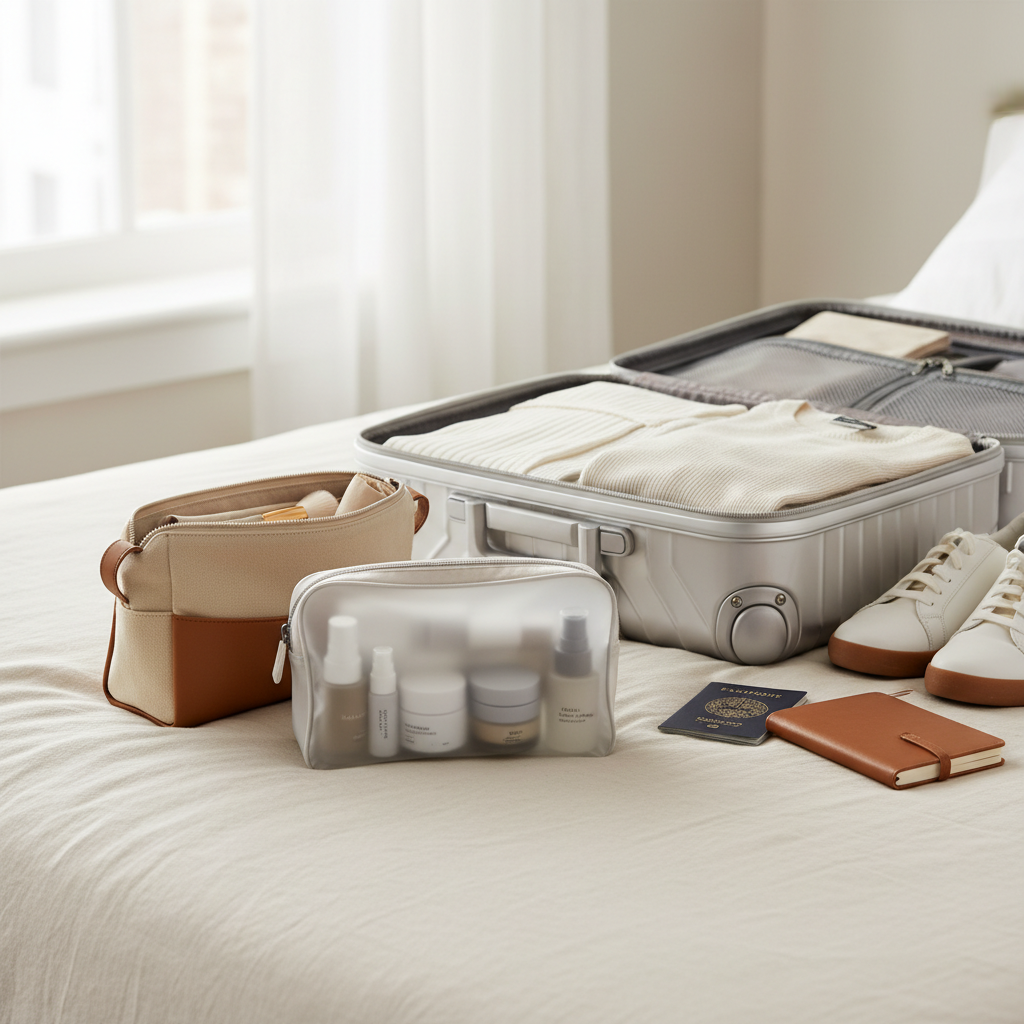
- Decant into purpose-built travel containers, and label them. Mystery white cream is how mistakes happen.
- Use cling wrap under jar lids before closing for extra leak protection.
- Double-bag liquids in a small zip pouch inside your toiletry bag.
- Keep one recovery item accessible, like lip balm or a small barrier cream, not buried in checked luggage.
Common mistakes that sabotage dry skin on trips
This is the part people skim, then regret. Dry skin is surprisingly easy to irritate when you’re tired and dehydrated.
- Trying a new retinoid, peel pad, or “detox” mask mid-trip, irritation often shows up 24–72 hours later.
- Over-cleansing to remove sunscreen instead of using a gentle double-cleanse approach when needed.
- Using hotel soap on your face, it can be harsh even if it smells nice.
- Only carrying heavy creams, then getting congestion and blaming “travel.” Layering lighter hydration often works better.
- Misting without sealing, it can feel refreshing but may leave skin tighter afterward.
According to Centers for Disease Control and Prevention (CDC), hand sanitizers with alcohol can dry skin, so bringing a hand cream is a small move that pays off, especially when you sanitize frequently during travel days.
When it’s worth getting professional help
If dryness turns into cracking, bleeding, intense burning, or a spreading rash, self-tweaks may not be enough. A dermatologist can help sort out eczema, contact dermatitis, or infection risk, and recommend prescription options if appropriate.
Also, if you’re managing a skin condition or using prescription topicals, it’s usually safer to keep travel routines simple and confirm changes with a clinician.
Conclusion: a dry-skin travel kit should feel boring (in a good way)
The best travel skincare kit for dry skin is rarely trendy, it’s consistent, gentle, and built around barrier support, with sunscreen you’ll actually use. If you do one thing today, choose your core five and decant them into leak-proof minis, then do a quick two-night test at home so travel day isn’t your first trial run.
Key takeaways
- Pack for function: cleanse, hydrate, moisturize, seal, protect.
- One active max, and only if already tolerated.
- Spot-seal with a balm instead of coating your whole face if you clog easily.
- Test your kit before departure to catch irritation or packaging leaks.
FAQ
- What is the best travel skincare kit for dry skin if I only want 3 items?
Go with a gentle cleanser, a barrier moisturizer, and a hydrating sunscreen. Add a tiny lip balm if you can, lips often crack first on flights. - Should I use face oil on planes for dry skin?
Oil can help some people feel less tight, but it doesn’t replace hydration. If you use oil, apply it over a hydrating layer or mix a drop into moisturizer, and keep it off clog-prone zones if you break out easily. - Is hyaluronic acid enough for travel dryness?
Often not by itself. HA can support hydration, but you typically need a moisturizer on top to reduce water loss, otherwise skin can feel tight again quickly in dry air. - How do I prevent my moisturizer from leaking in my carry-on?
Use a travel container with a tight cap, keep jars upright, add a small piece of cling wrap under the lid, and store liquids in a separate zip bag. - Can I exfoliate while traveling if my skin is flaky?
Sometimes, but keep it gentle and infrequent, and avoid starting a new exfoliant on the trip. If flakes come from irritation, exfoliating can make it worse, when in doubt, focus on barrier repair instead. - What if sunscreen makes my dry skin look patchy?
Try a more moisturizing SPF or apply a thin moisturizer layer first, then sunscreen. Also check application technique, rubbing too hard can lift dry patches. - Do I need a separate night cream for travel?
Not always. Many people do fine with one barrier cream plus a small balm for spot areas. If you’re going somewhere cold or you crack easily, a richer night option can be worth the space.
If you’re building a kit and keep getting stuck between “too light” and “too heavy,” it may help to map your current routine to the five core functions above, then swap one item at a time until your travel setup feels predictable instead of reactive.