
Travel clothes wrinkle release is one of those suitcase savers that works great in some rooms and feels useless in others, and the difference usually comes down to fabric, humidity, and how you apply it.
If you travel for work, weddings, conferences, or even just want photos that don’t scream “fresh off the red-eye,” getting wrinkles out quickly matters more than people admit. You rarely have time to iron, hotel irons can be questionable, and steaming in a tiny bathroom takes practice.
This guide focuses on practical, fabric-safe ways to get better results from wrinkle release spray, plus a few backup tactics for the moments when spray alone won’t cut it.
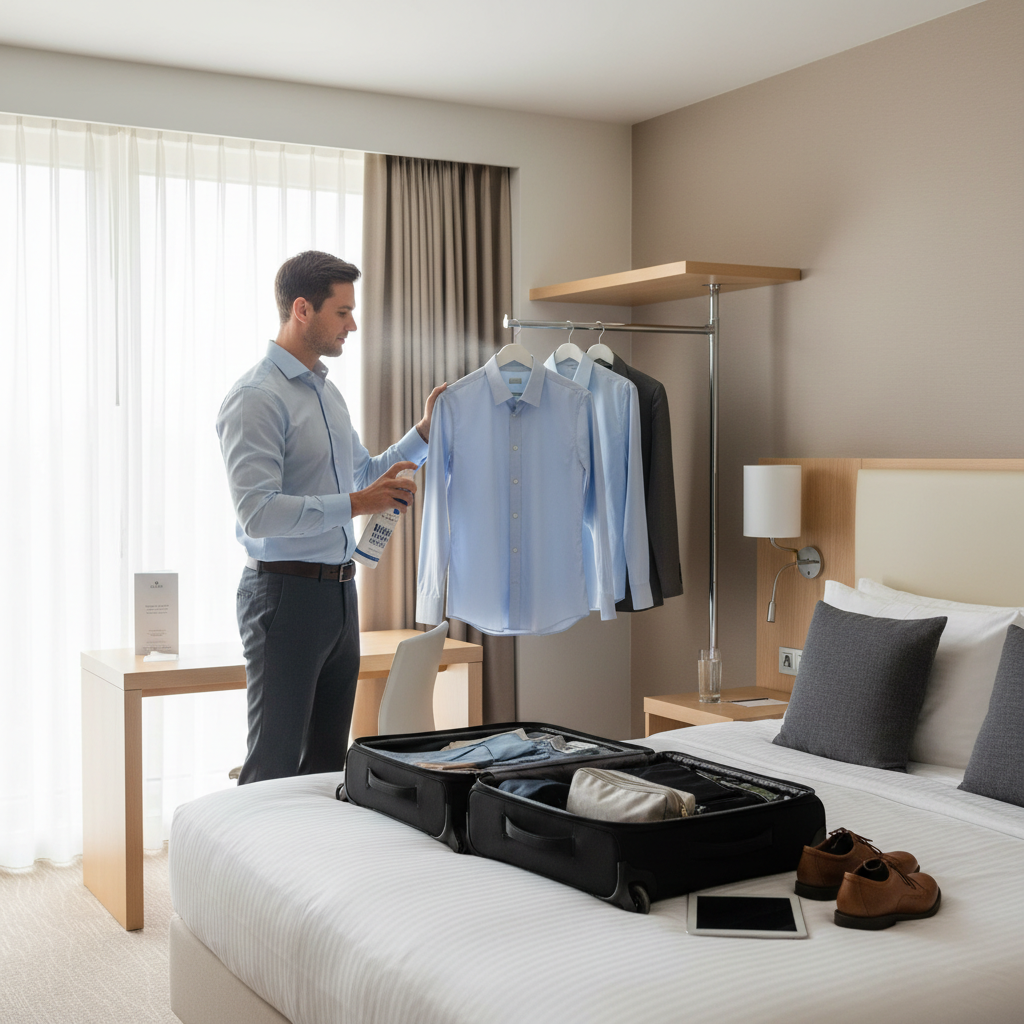
Why wrinkle release spray sometimes “does nothing”
Most sprays rely on a simple idea, relax the fibers slightly, add a bit of moisture, then you help the fabric reset by smoothing and letting it dry under light tension. When one part of that chain breaks, results look disappointing.
- Fabric type fights back: crisp cotton, linen, and some heavy weaves tend to hold creases; knits and synthetics often respond faster.
- Not enough dwell time: spraying and immediately wearing it traps wrinkles in place.
- Room conditions: very dry air can slow the “relax and reset” effect; overly humid rooms can delay drying and leave fabric limp.
- Over-application: soaking can cause water marks, especially on silk-like blends, rayon, or structured garments.
- Hard creases from packing: fold lines pressed for hours under weight may need steam or heat to fully release.
According to the U.S. Consumer Product Safety Commission (CPSC), consumers should use household chemical products as directed on the label and ensure adequate ventilation, which is especially relevant in small hotel bathrooms.
Quick self-check: are you using it in the “spray-friendly” scenario?
Before you change your whole routine, figure out whether spray is the right tool for what’s in front of you.
- Good match: light wrinkles, travel knits, polyester blends, tees, casual dresses, blouses without heavy structure.
- Mixed results: cotton button-downs, chinos, rayon, viscose, garments with lining.
- Usually needs backup: linen, thick denim, suits with sharp creases, pleats you want to keep crisp, heavily wrinkled formalwear.
If you’re in that middle category, technique matters a lot, and one small change often fixes the “meh” result.
How to apply travel wrinkle release spray for better results
Here’s the version that works in real rooms, not just in a brand demo.
1) Hang it right, then create light tension
Put the item on a hanger and tug gently at seams and hems. You’re not stretching the garment, you’re just giving the fibers a “flat” target shape to dry into.
2) Mist from the right distance
In most cases, a fine mist from about 6–10 inches away beats close-range spraying. If droplets collect and run, you’ve gone too heavy, and drying becomes uneven.
3) Smooth with your hands, don’t rub aggressively
Use open palms to press and sweep downward. Rubbing can rough up delicate fibers and can shift fabric grain on lighter weaves.
4) Give it time to dry before wearing
Plan for 5–15 minutes depending on room airflow and fabric weight. If you put it on damp, wrinkles often “set” again from body heat and movement.
5) Use airflow like a cheat code
Turn on the room fan, crack a window if possible, or hang near (not on) the A/C vent for a few minutes. The point is faster, more even drying.

Fabric-specific tips (what to do, what to avoid)
This is where most people waste time. A “one method for everything” approach is why travel clothes wrinkle release feels inconsistent.
- Cotton: use a slightly heavier mist, smooth firmly, and give more dry time. For collar/cuffs, consider a quick steam boost.
- Polyester/athleisure blends: go light on spray; these fabrics often relax quickly. Too much product can feel tacky.
- Rayon/viscose: test a hidden area first; water spotting can happen. Use minimal spray and strong airflow.
- Wool/suit fabric: mist lightly and smooth along the grain; for sharp fold lines, steaming tends to work better than spray alone.
- Silk/satin: be cautious, some sprays can leave marks. If you’re unsure, plain water mist plus gentle smoothing is often safer, and consult the care label.
When in doubt, do a small spot test on an inside hem or seam area, especially with dark colors or “dry clean only” labels.
Spray vs. steam vs. iron: what to use when (simple table)
If you’re packing light, you want the right tool for the wrinkle type, not the tool you happen to have.
| Situation | Wrinkle Release Spray | Steam (shower/steamer) | Iron (hotel/travel) |
|---|---|---|---|
| Light rumples from packing | Works well, fast | Also works, slower setup | Usually unnecessary |
| Hard fold creases on cotton | Mixed results | Often better | Best for crisp finish |
| Delicate fabrics (silk-like) | May spot, spot test | Gentle, keep distance | Higher risk of shine/scorch |
| Suits, structured pieces | Okay for minor wrinkles | Usually preferred | Risky without skill |
| No time, need wearable in 10 minutes | Best option | Depends on setup | Can be quick, but variable quality |
Practical “hotel room routine” (10–20 minutes, low stress)
If you want a repeatable system, this is the one that tends to survive real travel days.
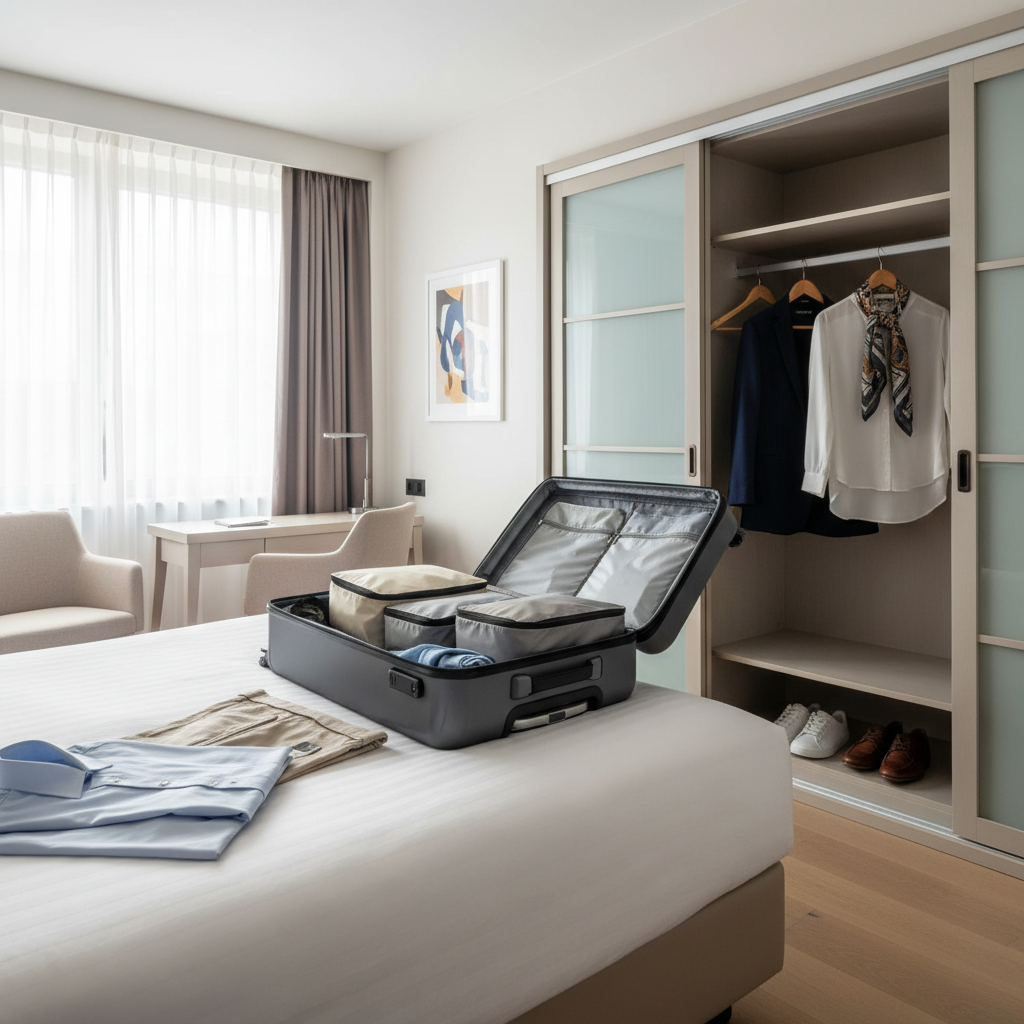
- Unpack early: hang your key outfit as soon as you arrive, even if you won’t wear it until tomorrow.
- Target the worst zones: underarms, lower back, seat area, and the fold line across the midsection.
- Use travel clothes wrinkle release sparingly: one pass, then assess under good light; you can add more, but you can’t “unspray” spots.
- Combine with shower humidity (optional): hang the item in the bathroom while you shower, then do a light mist and smoothing afterward.
- Finish with airflow: fan or A/C for quicker drying and a cleaner drape.
According to the Federal Trade Commission (FTC), care labels help consumers understand how to maintain textiles, so when a label warns against water-based treatment, it’s worth respecting and choosing steam or professional care instead.
Common mistakes that cause stains, smells, or “crunchy” fabric
Most issues people blame on the product are really application or fabric mismatch.
- Spraying too close: creates wet spots and uneven drying.
- Using on “dry clean only” without a test: sometimes fine, sometimes a regret, and it’s hard to predict by look alone.
- Layering fragrance on fragrance: scented spray plus hotel detergent plus perfume can turn into a headache, especially in tight spaces.
- Wearing before dry: fabric can re-wrinkle, and some formulas may transfer slightly to skin or other clothing.
- Using on leather/suede: generally a bad idea unless the label explicitly allows it.
If you have asthma, fragrance sensitivity, or skin reactions, picking a fragrance-free option and ventilating the room is a safer bet, and if you’re unsure, checking with a healthcare professional makes sense.
When it’s worth getting professional help (or at least asking)
There are moments when “good enough” at-home fixes cost more time than they save.
- Important events: interviews, weddings, speaking gigs, court appearances, anything with photos and close-up attention.
- High-value garments: suits, formal dresses, vintage pieces, structured items with interfacing.
- Persistent odor or staining: if wrinkles come with smells from long travel, a proper clean may matter more than a smooth surface.
Hotel laundry services and local dry cleaners can be surprisingly fast, and many will do a quick press. If you’re traveling internationally or have specialty fabrics, asking what process they use before handing it over can prevent surprises.
Key takeaways (so you can act fast)
- Hang, mist, smooth, dry is the core sequence, skipping “dry” is the usual reason results fade.
- Fabric matters, knits and synthetics respond better than heavy cotton or linen.
- Airflow is underrated, it makes travel clothes wrinkle release look more consistent.
- For hard creases, pair spray with steam, or use an iron carefully when you need sharp lines.
If you want one simple move today, unpack and hang your outfit early, then use a light mist and airflow, it’s the lowest-effort way to look put together.
FAQ
How long should I wait after using wrinkle release spray?
Usually 5–15 minutes. If the fabric still feels cool or damp, give it more time or add airflow, wearing it early often brings wrinkles back.
Can I use travel clothes wrinkle release on “dry clean only” items?
Sometimes it works, but it’s a higher-risk category. A spot test on an inside seam helps, and for structured pieces, steam or a professional press is often safer.
Why does my shirt look better, then wrinkle again after 30 minutes?
Most often it went on while still damp, or the garment never got smoothed under light tension. Re-mist lightly, smooth, and let it dry fully on a hanger.
Is it okay to make my own wrinkle release spray?
Some travelers use water-only misting, which is often the safest DIY option. Mixing additives can increase spotting or residue, so test carefully and avoid experimenting on expensive fabrics.
Will wrinkle release spray remove odors too?
It can reduce light “stale suitcase” smells, but it won’t replace washing. If odor is embedded, especially in underarm areas, laundry or dry cleaning tends to work better.
What’s the best way to prevent wrinkles before I even spray?
Fold less, roll more for knits, use packing cubes so items don’t shift, and keep heavy shoes or toiletries away from dress shirts. Hanging key pieces right after arrival is the simplest win.
Can I use it on workout clothes or uniforms?
Often yes for polyester blends, but go light to avoid residue. If the item has logos, heat transfers, or coatings, test a small area first.
If you’re traveling often and want a more “set it and forget it” routine, consider building a small kit with a mini mist bottle, a sturdy travel hanger, and a plan for when spray isn’t enough, it keeps your clothes predictable even when the trip isn’t.