
Compressible packing bags travel setups make the biggest difference when your suitcase feels “full” before you even add shoes, a jacket, or toiletries. The appeal is simple: you compress air out, reclaim usable space, and keep outfits grouped so you stop rummaging mid-trip.
But compression can also backfire. Some bags save volume yet create a heavier, denser suitcase that’s harder to close, harder to lift, and more likely to trigger airline weight issues. Others leak air, snag zippers, or wrinkle fabrics you actually wanted to wear right away.
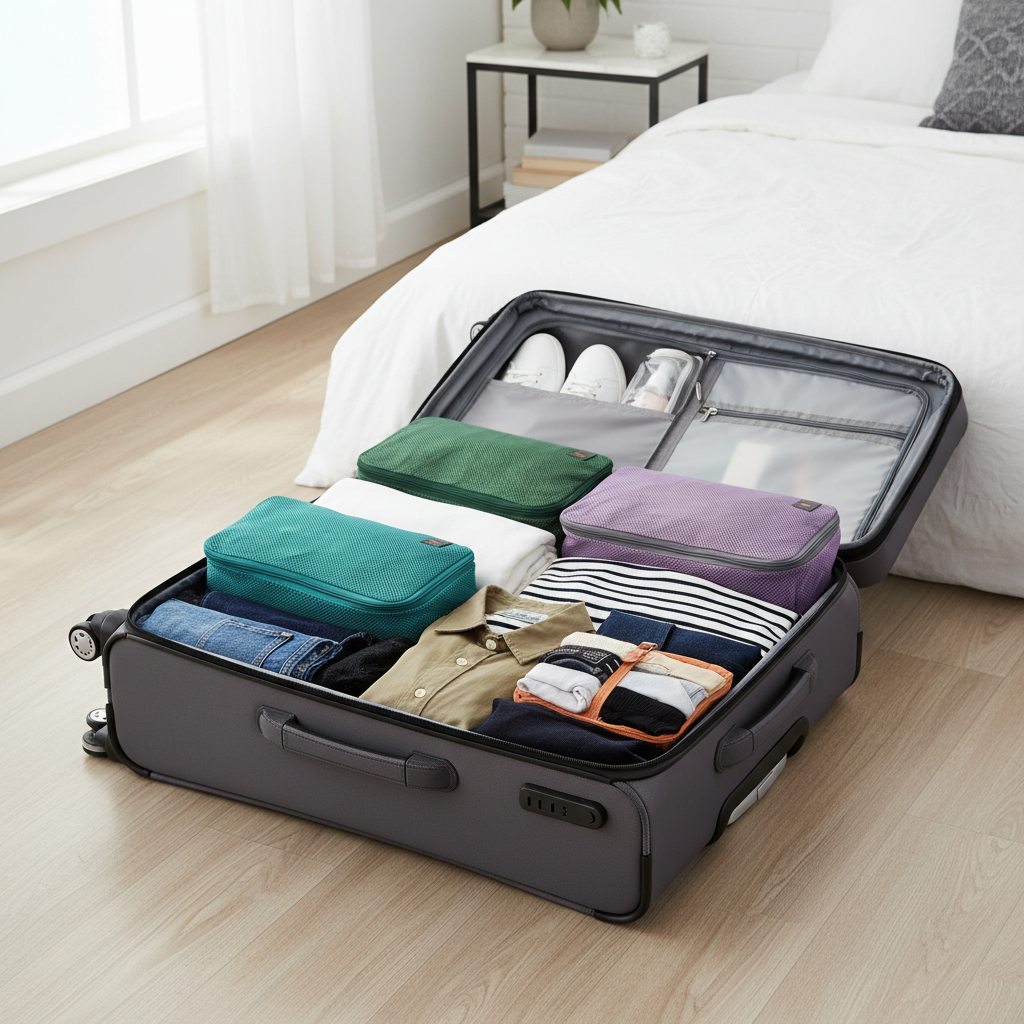
This guide breaks down when compressible bags genuinely help, how to choose between compression packing cubes and vacuum-style bags, and a practical packing flow that keeps your clothes accessible instead of turning your luggage into a brick.
Why compressible packing bags actually save space (and when they don’t)
Compression works by reducing the air trapped between fabrics. For soft items like tees, underwear, and fleece, that air is a big part of the “bulk,” so you get noticeable savings.
Where people get disappointed is expecting compression to change the laws of physics. If you’re packing stiff items or structured clothing, there isn’t much air to remove, so the “before/after” looks minor.
- Works best for: T-shirts, base layers, underwear, socks, sweaters, light jackets, gym wear.
- Mixed results: Jeans, hoodies, thick knits, towels (they compress, but get heavy and dense).
- Usually not worth it: Blazers, formalwear, anything that creases easily, bulky shoes.
One more real-world factor: compressing clothing often shifts your limiting factor from volume to weight. According to TSA, carry-on and checked baggage screening focuses on safety, but airline baggage allowances and fees vary by carrier—so a “smaller” bag can still cost you if it becomes overweight.
Compression packing cubes vs vacuum bags: quick comparison
Most travelers mean one of two products when they say compressible packing bags: zipper-compression cubes (no pump needed) or vacuum-style bags (manual roll-out or a pump). They solve different problems.
| Type | Best for | Pros | Trade-offs |
|---|---|---|---|
| Compression packing cubes (zipper) | Carry-ons, frequent hotel moves, neat outfit grouping | Fast access, no accessories, helps organization | Less compression than vacuum bags; can strain zippers if overfilled |
| Roll-up “vacuum” bags (no pump) | Road trips, occasional travel, puffy items | More compression than cubes, cheap, good for sweaters/jackets | Harder access; re-packing daily gets annoying; seals can leak |
| Pump vacuum bags | Long trips, bulky winter gear, storage + travel combo | Maximum compression, very compact | Needs pump or vacuum; wrinkles; can create “brick luggage” |
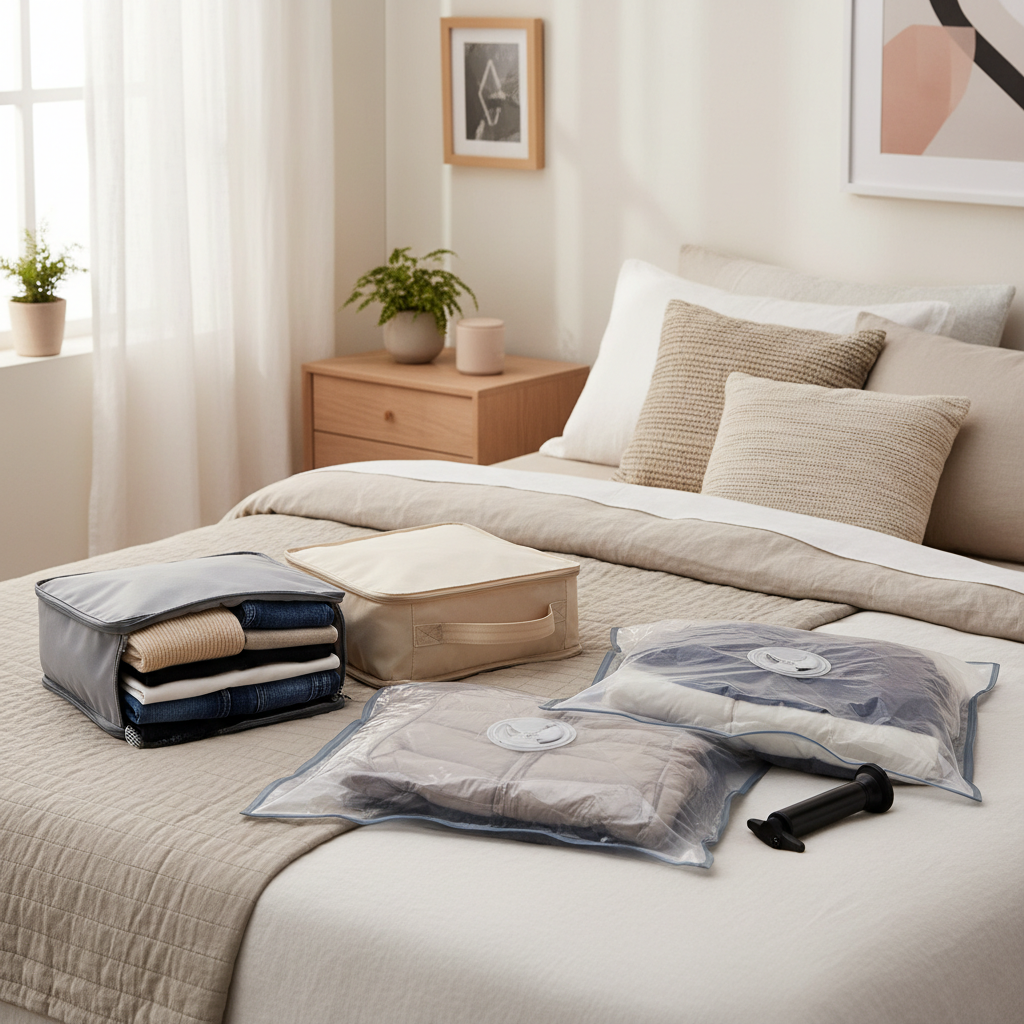
If you travel often and unpack/repack during the trip, compression cubes usually feel more “livable.” Vacuum bags make sense when you’re prioritizing raw space savings and you won’t need to access items constantly.
A quick self-check: do you need compressible bags for this trip?
Before buying anything, check what’s actually causing your packing pain. Many people buy compression products when the real issue is item selection or a suitcase that’s too small for the trip style.
- You’ll benefit if you’re packing lots of soft layers, traveling with kids, or sharing one suitcase.
- You’ll benefit if you hate “misc piles” and want clean categories (tops, bottoms, sleep, gym).
- Skip or limit use if you’re already close to airline weight limits or have back/shoulder issues lifting luggage.
- Skip or limit use if your trip includes formalwear you need crisp on arrival.
Also consider your logistics: if you’ll be moving hotels every 1–2 nights, the convenience factor matters more than maximum compression.
How to pack with compressible packing bags without over-compressing
The most reliable approach is using compression for the right categories, then leaving “buffer space” for odd shapes and quick-access items. This keeps your suitcase functional.
Step-by-step packing flow
- Start with categories: split into tops, bottoms, underwear/socks, sleepwear, workout, outerwear.
- Pick 1–2 categories to compress hard: usually underwear/socks and tees/base layers.
- Roll or fold consistently: either works, but consistency prevents lumps that waste space.
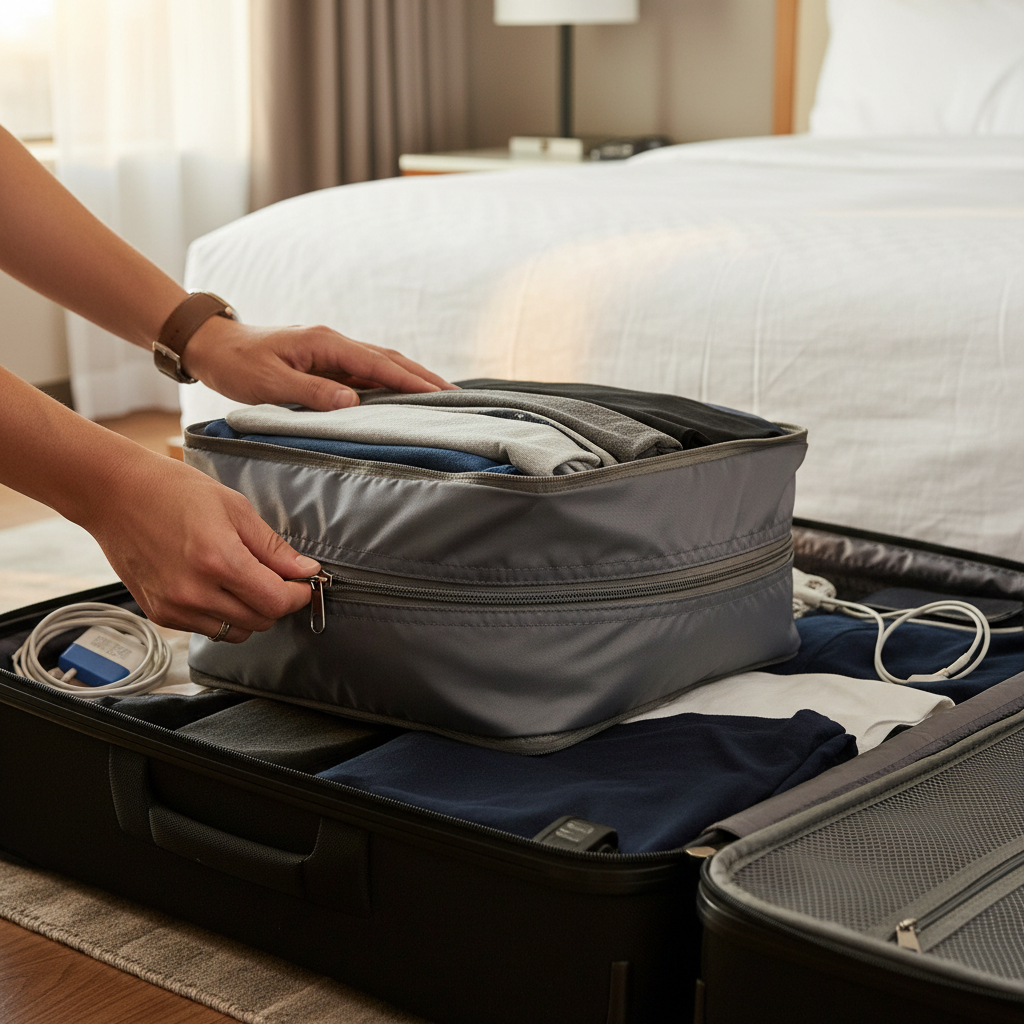
- Compress to “flat,” not “rock”: stop when the cube lies flat and zips smoothly.
- Use the suitcase edges: place compressed cubes along the perimeter; keep the center for shoes/toiletry kit.
- Leave an access lane: reserve a small top area for chargers, meds, and a spare shirt.
For vacuum-style bags, aim to compress only what you won’t need daily. If you keep opening and resealing, you’ll spend too much time repacking and the seal may fail.
What to look for when buying compressible packing bags
Not all “compressible” products behave the same, and small design choices change the experience a lot.
- Zipper quality: look for sturdy coil zippers and a smooth pull; cheap compression zippers fail first.
- Fabric strength: ripstop nylon or sturdy polyester tends to resist snags from zippers and suitcase seams.
- Breathability vs waterproofing: for travel, mild water resistance is helpful, but fully airtight isn’t always needed.
- Size set that matches your bag: one “large” cube that blocks the suitcase corners often wastes space.
- Handle placement: side handles make hotel unpacking easier, especially when cubes are packed dense.
For vacuum bags, check the valve design and seal thickness. In many cases, the bag “works” at home then slowly re-inflates in transit if the seal is finicky.
Common mistakes that waste space (or create new problems)
Most complaints about compressible bags come down to a few predictable missteps. Fixing them is usually easier than buying a different brand.
- Overfilling before compressing: if the zipper fights you, you’ve already lost; remove 1–2 items and try again.
- Compressing heavy fabrics: a compressed hoodie stack can turn a carry-on into a weight penalty.
- Ignoring wrinkles: vacuum compression can crease cotton shirts and dress items; keep those uncompressed.
- Using too many small bags: excessive segmentation creates dead zones between cubes.
- No plan for dirty laundry: bring one bag dedicated to worn clothes, or your “clean system” collapses fast.
One subtle point: compression can reduce airflow around damp items. If you pack slightly wet swimwear or gym clothes into an airtight bag, odors and mildew become more likely, so let items dry or use a breathable laundry pouch.
Practical packing layouts for common trip types
Here are layouts that tend to work in the real world, especially for U.S. carry-on and mid-size checked bags.
Weekend carry-on (2–3 nights)
- 1 medium compression cube: tops + sleepwear
- 1 small compression cube: underwear + socks
- Bottoms folded flat (no compression) along the back panel
- Shoes in a shoe bag at one end, toiletries at the other
Work trip with one nicer outfit
- Use compression cubes for casual layers only
- Keep dress shirt and blazer in a folder or laid flat on top
- Pack a small steamer only if you know you’ll use it; otherwise plan on hotel iron
Cold-weather trip (bulky layers)
- Vacuum or roll-up bag for one puffer or thick knit set you won’t wear daily
- Compression cube for base layers
- Wear the bulkiest shoes and jacket in transit when possible
Key takeaways before you buy (or repack)
- Compress soft items, not structured pieces. That’s where volume savings show up.
- Choose convenience vs maximum compression. Cubes are easier day-to-day; vacuum bags save more space.
- Stop compressing when the bag lies flat and zips cleanly. Over-compression causes zipper failures and brick luggage.
- Plan for weight. Smaller doesn’t automatically mean lighter, and airlines care about pounds.
Conclusion: make space without making your suitcase miserable
Compressible packing bags can be a real win when you use them intentionally: soft layers, clear categories, and just enough compression to smooth out bulk. If you’re chasing maximum compression for everything, you usually end up with a heavy, awkward suitcase and wrinkled clothes.
Action plan: pick one trip coming up, test with two cubes (one for small items, one for tops), then adjust based on what you actually reached for during the trip. That small experiment tells you more than any product description.
FAQ
Do compressible packing bags travel well in carry-ons?
Usually yes, especially zipper-compression cubes. They keep outfits compact and easy to access without needing a pump, which suits quick airport and hotel routines.
Will compression bags help me avoid checked baggage fees?
They can help you fit more into a carry-on, but fees depend on airline size and weight rules. Compression can also make a bag heavier, so it’s worth checking your carrier’s limits.
Are vacuum travel bags allowed through TSA?
In many cases they’re fine, but TSA may open bags for inspection. If a vacuum bag is sealed inside a suitcase, it might be disturbed during screening, so plan for possible resealing.
Do compression cubes wrinkle clothes?
They can, especially if you overpack or compress rigid fabrics. For wrinkle-prone items, lighter compression and careful folding tends to work better than maximum squeeze.
How many compressible bags should I bring for a 7-day trip?
A common sweet spot is 3–5 pieces: one for underwear/socks, one or two for tops, one for bottoms or gym gear, plus a separate laundry bag. Beyond that, you may lose space to seams and gaps.
What’s better: rolling or folding inside compression cubes?
Both can work. Rolling often reduces crease lines on casual clothing, while folding stacks neatly for shirts. The bigger factor is packing evenly so the cube compresses flat.
Can I compress wet swimwear or sweaty gym clothes?
It’s not ideal. Sealing damp items can trap moisture and odors, and in some situations mildew becomes more likely. Let items dry or use a breathable laundry pouch instead.
If you’re trying to decide between cube-style compression and vacuum-style bags, or you want a packing list that matches your airline, trip length, and wardrobe mix, a quick “what you’re actually bringing” checklist can save more space than any gadget.